
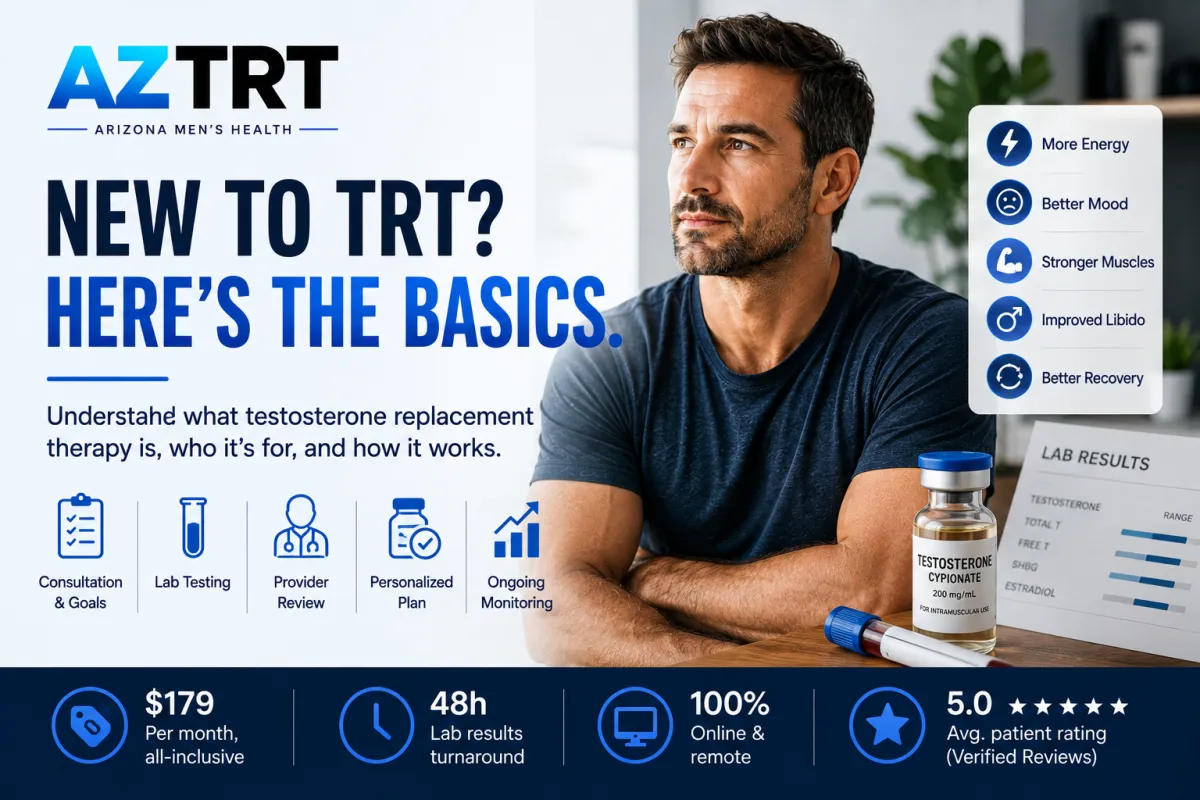
What Is TRT? A Plain-English Guide and Glossary
TRT stands for testosterone replacement therapy, a prescription treatment for men whose bodies don't make enough testosterone. Below is the short version of how it works, followed by a glossary of the terms you'll run into on lab reports and in visits.
What it is
TRT involves supplementing your body's natural testosterone with a prescribed form of the hormone, typically delivered through injections, though other methods exist. The goal is to bring low levels back into a healthy, normal range, which can help with energy, mood, muscle mass, libido, and overall quality of life.
Who it's for
TRT is intended for men who have been diagnosed with clinically low testosterone — confirmed through bloodwork, not just symptoms. It's not a general performance enhancer, and it's not appropriate for everyone. A licensed provider evaluates your labs, symptoms, and health history before recommending treatment.
What the process typically looks like
- An initial consultation to discuss symptoms and goals
- Bloodwork to measure current hormone levels
- A provider review to determine whether TRT is appropriate
- If appropriate, a personalized treatment plan
- Ongoing monitoring through follow-up labs and check-ins
What it isn't
TRT isn't a quick fix, and it isn't something to start without proper testing. Hormone therapy works best as part of an ongoing, monitored relationship with a provider — not a one-time purchase.
If you think low testosterone might be affecting you, the right first step is a conversation with a licensed provider and a lab test, not guesswork.
TRT glossary: the terms you'll hear
- Total testosterone: all the testosterone in your blood, bound and unbound. Free vs. total testosterone
- Free testosterone: the unbound share your tissues can use directly.
- SHBG: a protein that binds testosterone; high SHBG can mean less free testosterone. What is SHBG?
- Estradiol (E2): a form of estrogen men make partly from testosterone. TRT and estrogen management
- Hematocrit: the share of your blood made up of red cells. Testosterone can raise it, so it is monitored. Hematocrit monitoring on TRT
- Trough: your level just before the next dose, often when follow-up labs are drawn. Peak and trough timing
- Cypionate and enanthate: two common injectable forms of testosterone. Cypionate vs. enanthate
- Primary vs. secondary hypogonadism: whether the issue starts in the testes or in the brain signals that drive them. Primary vs. secondary hypogonadism
- Enclomiphene: an oral medication that prompts your body to make more of its own testosterone; some men discuss it as an alternative. Enclomiphene vs. TRT
How it works at AZTRT
Visits happen by video with an Arizona-licensed provider, initial labs are drawn at a lab near you, and if treatment is prescribed, medication ships to your Arizona address. TRT is $149 a month in 90-day terms ($447 per term, or $357.60 if you pay the 90 days up front). Initial labs are included; follow-up labs are billed separately. See pricing for the full list.
Still deciding whether this applies to you? Book a free consult. The first step is a conversation and a lab test, not a prescription.
If this was useful, you may also want to read our post on How to Get Started With TRT, or browse the full AZTRT blog for more Arizona men's health guides.
