
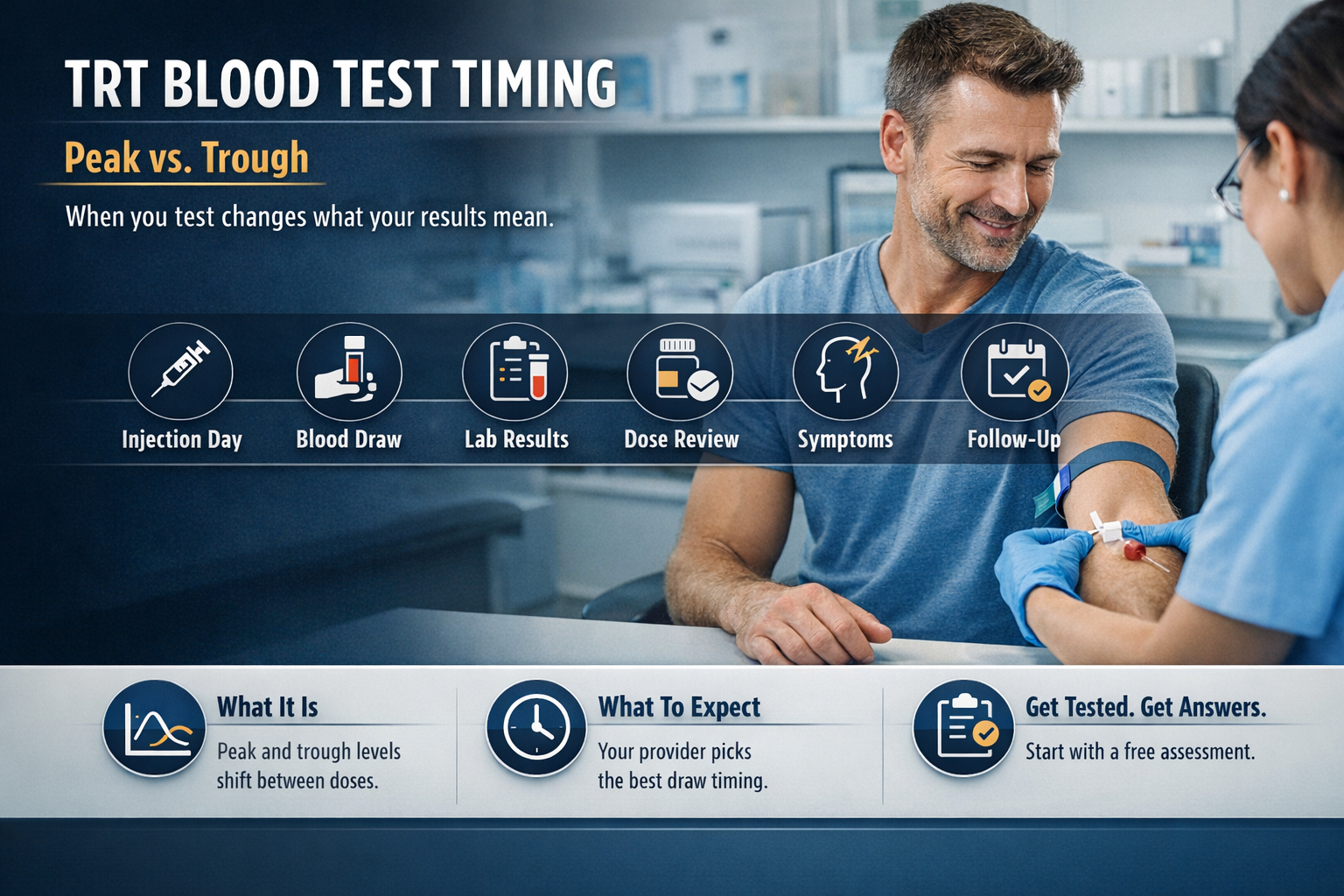
TRT Peak vs. Trough: When to Get Your Blood Drawn on TRT
If you are on testosterone replacement therapy, one of the most common questions is simple: when should I get my blood drawn on TRT? The answer depends on how you take testosterone, how often you inject, and what your provider is trying to learn. Understanding TRT peak and trough levels helps you avoid panicking over a "high" number drawn the day after a shot, or a "low" number drawn the morning of your next one.
For Arizona men on telehealth or in-clinic TRT, this is also practical. Phoenix-area labs are plentiful, but a draw at the wrong time can make good dosing look bad. Here is how it works.
What Are Peak and Trough Testosterone Levels?
When you inject testosterone cypionate or enanthate, the hormone is released gradually from the injection site. Your blood level climbs to a peak shortly after the dose, then slowly falls until the next injection. The lowest point, right before your next dose, is the trough. pharmacology reviews of testosterone preparations describe this rise-and-fall pattern for injectable esters, with larger swings the longer the gap between doses.
That means one man can have a very different lab value on Tuesday than on Friday, on the exact same protocol. Neither is "wrong." They are just different points on the same curve.
When Should You Get Blood Drawn on TRT?
The Endocrine Society clinical practice guideline on testosterone therapy addresses monitoring after you start treatment, and for injectable esters it is commonly interpreted as checking a level roughly midway between injections and adjusting the dose toward the middle of the normal range. In real-world practice, clinics often use one of these approaches:
- Midpoint draw: Drawn about halfway between injections, giving a rough "average" picture of your exposure.
- Trough draw: Drawn right before your next injection, showing your lowest point and whether symptoms might return late in the cycle.
- Peak draw: Drawn a day or two after injecting, sometimes used to confirm you are not running too high.
No single method is right for everyone. What matters is that you and your provider pick one and stick with it so results can be compared over time.
Why Timing Changes Your Results
Imagine a man who injects once a week. A draw 24 hours after the shot may show a level well above the reference range, while a draw seven days later may land near the low end. If he only saw one of those numbers, he might change his dose for the wrong reason. This is also why the way you inject matters. Our guide to how often you take TRT injections explains how splitting a weekly dose into smaller, more frequent injections can narrow the swings.
Injection frequency and stability
More frequent, smaller doses generally produce steadier levels. Research on serum testosterone remaining stable between subcutaneous injections suggests that frequent small injections can reduce the peak-to-trough gap. If you are weighing options, read our comparison of subcutaneous vs. intramuscular testosterone injections.
Which testosterone ester you use
Cypionate and enanthate behave similarly in practice, though individual response varies. If you are curious about the differences, see testosterone cypionate vs. enanthate.
Not Sure Your Labs Are Timed Right?
Doctor-supervised • Arizona-based • Telehealth available
Get Started — Free Assessment →Practical Tips for Your Next TRT Lab Draw
- Ask your provider which timing they want (midpoint, trough, or peak) before you book the lab.
- Keep it consistent. Draw at the same point in your injection cycle each time.
- Go in the morning when possible. Natural testosterone is highest early in the day, and morning draws are the standard for diagnosis.
- Note your injection date and time and tell the lab or your provider exactly when you last dosed.
- Do not change your dose off one number. Pair results with how you feel and your other markers.
Total testosterone is only part of the picture. Your provider will also look at estradiol, hematocrit, PSA and more. Our overview of bloodwork on TRT and how often it gets monitored covers the full panel, and what your testosterone level should be on TRT explains target ranges so you can read your results with context.
Arizona Considerations
Whether you live in Phoenix, Scottsdale, Mesa, Tempe, Chandler, Gilbert, or Tucson, you can usually get a draw at a national lab location close to home and have results sent to your provider. With telehealth TRT, you can schedule the draw around your injection day without taking time off work, which makes consistent timing easier. Also keep your supplies in mind during our summers; heat can affect how you store medication.
When to Call Your Provider
Reach out if your results seem very different from how you feel, if symptoms return a day or two before your next dose, or if you have side effects such as swelling, headaches, or mood changes. Those clues can point toward a dosing schedule adjustment rather than a dose increase.
Get Your TRT Plan and Labs Dialed In
Doctor-supervised • Arizona-based • Telehealth available
Get Started — Free Assessment →Frequently asked questions
When is the best time to get blood work done on TRT?
It depends on your protocol, but many providers draw midway between injections or at the trough just before the next dose. The most important rule is to be consistent so your results can be compared over time.
Should I inject before or after my blood test?
If your provider wants a trough level, you typically draw blood first and inject afterward. If you are unsure, ask your clinic before the appointment so you do not accidentally test at a peak.
Why is my testosterone so high the day after my injection?
That is usually your peak. Levels rise soon after an injection and then decline. A high peak reading does not by itself mean your dose is too high, which is why your provider interprets it alongside timing and symptoms.
Sources
- Testosterone Therapy in Men With Hypogonadism: An Endocrine Society Clinical Practice Guideline — PubMed / Endocrine Society
- Pharmacology of testosterone replacement therapy preparations — PubMed Central
- Serum Testosterone Concentrations Remain Stable Between Injections in Patients Receiving Subcutaneous Testosterone — PubMed Central
