
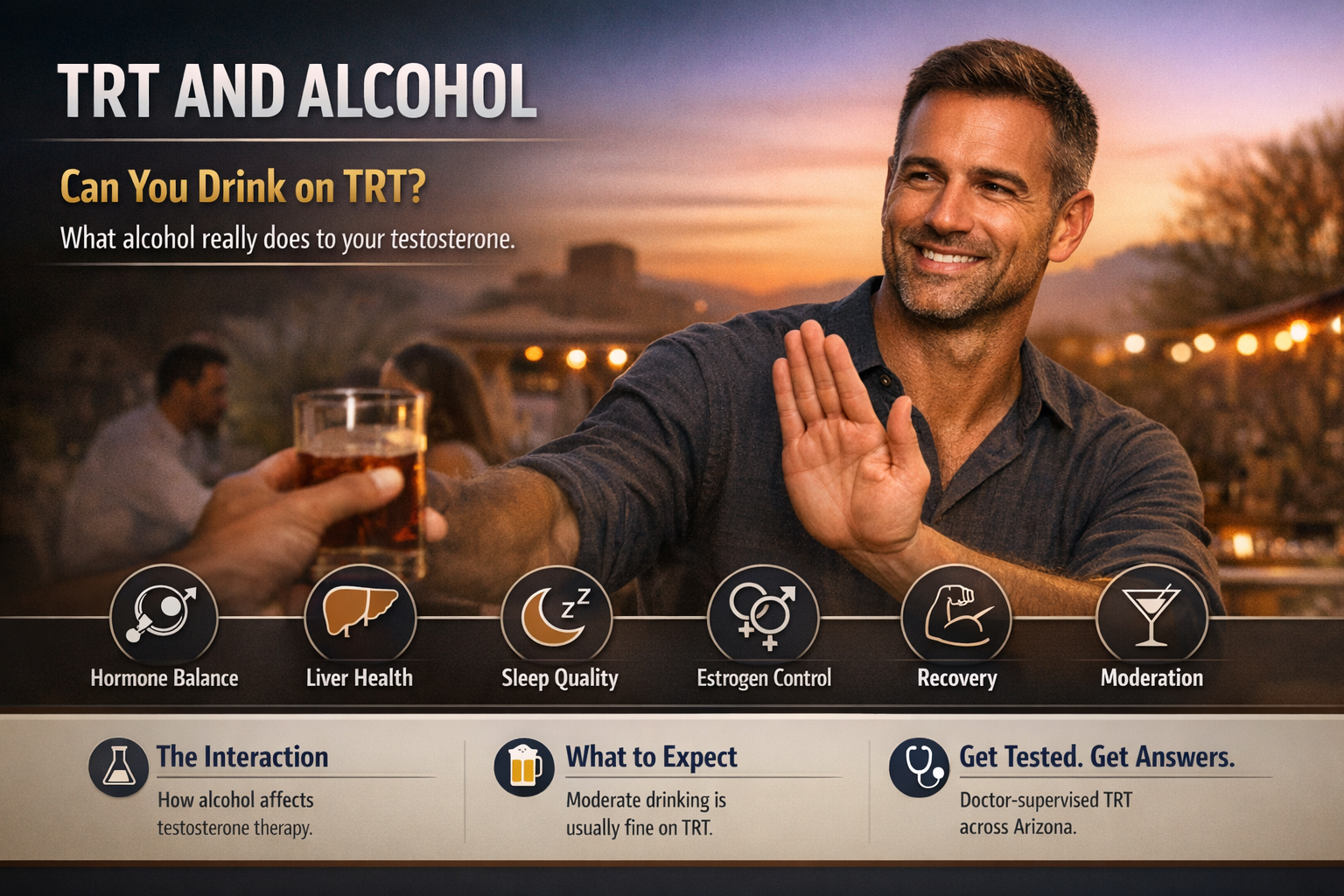
TRT and Alcohol: Can You Drink on Testosterone Therapy?
TRT and alcohol is one of the most common questions Arizona men ask before — and after — starting testosterone replacement therapy. It makes sense: happy hours in Scottsdale, a cold beer after a summer hike, a glass of wine at dinner in Phoenix. Nobody wants to give up their social life to fix their hormones. The good news is that for most men, you don't have to. The honest answer is that the dose makes the poison, and understanding how alcohol interacts with testosterone therapy helps you make smart choices instead of guessing.
How alcohol affects testosterone in men
Alcohol influences the same hormonal system TRT is designed to support: the hypothalamic-pituitary-gonadal (HPG) axis. Your brain signals your testes to make testosterone, and alcohol interferes at multiple points in that chain. A review of alcohol's effects on testosterone synthesis in men found that while a single low dose of alcohol can briefly nudge testosterone up, drinking large volumes is consistently associated with reduced serum testosterone — driven by increased stress-axis activity, inflammation, and oxidative stress.
The damage isn't only at the signaling level. Research on alcohol and male reproduction shows that alcohol can directly harm the Leydig cells in the testes — the cells that actually produce testosterone — and interfere with the hypothalamus and pituitary gland that control them. Heavy, chronic drinking is one of the classic lifestyle causes of secondary low testosterone, alongside poor sleep, obesity, and chronic stress.
How much matters? A systematic review and meta-analysis of alcohol's effect on LH, FSH, and testosterone confirms the dose-dependent pattern: light drinking has modest, mostly transient effects, while heavy consumption meaningfully disrupts the hormones that govern testosterone production. If your levels are already borderline — something we cover in our guide to what testosterone level is considered low — regular heavy drinking can be the difference between "low normal" and genuinely symptomatic.
Does alcohol cancel out TRT?
Here's the nuance most articles miss: once you're on TRT, your testosterone level comes primarily from your prescribed dose, not your testes. So a few drinks won't "erase" your injection the way they can suppress natural production. But alcohol still works against your results in four important ways:
- Estrogen conversion. Alcohol increases aromatase activity, the enzyme that converts testosterone into estradiol. More drinking can mean higher E2 — and symptoms like water retention, moodiness, and stubborn chest fat. If you've read our guide to TRT and estrogen (E2) management, you know keeping that balance dialed in is central to feeling good on therapy.
- Liver workload. Your liver processes both alcohol and hormones. Heavy drinking elevates liver enzymes and impairs the organ that helps metabolize estrogen and binding proteins. Men with liver disease generally need to avoid alcohol on TRT entirely.
- Sleep disruption. Alcohol fragments deep sleep — and deep sleep is when your hormonal systems recover. The connection between sleep and testosterone levels is strong enough that a nightly drinking habit can blunt how much better you feel on therapy.
- Empty calories and belly fat. Beer and cocktails add up fast, and visceral fat itself raises aromatase and inflammation. That's the same vicious cycle behind low testosterone and weight gain — TRT helps break it, but heavy drinking rebuilds it.
Wondering if low T is holding you back?
Doctor-supervised • Arizona-based • Telehealth available
Get Started — Free Assessment →How much can you safely drink on TRT?
There's no universal rulebook, but clinical experience and the research above point to sensible tiers:
- Occasional light drinking (1–2 drinks, a few times per week): generally well tolerated by most healthy men on TRT. This is where most Arizona patients can comfortably live.
- Regular moderate drinking (roughly 3–7 drinks per week): usually manageable, but worth watching. If your estradiol runs high, your sleep is poor, or your weight is creeping up, alcohol is one of the first levers to pull.
- Heavy or binge drinking (multiple drinks daily, or 4+ in a sitting): works directly against therapy. It elevates estrogen, stresses the liver, wrecks sleep, and undermines the energy, mood, and body-composition benefits you started TRT for in the first place.
A practical habit many providers suggest: go easy on or skip alcohol on injection days. It isn't that alcohol chemically neutralizes the medication — it's that hydration, good sleep, and a calm cardiovascular system help your body make the best use of each dose.
Alcohol and your TRT lab work
One underrated reason to moderate drinking on TRT: your labs. Testosterone therapy is a monitored medical treatment — the Cleveland Clinic's overview of TRT emphasizes ongoing bloodwork and follow-up as core parts of safe therapy. Heavy drinking can skew several of the markers your provider tracks: liver enzymes (ALT/AST), estradiol, lipids, and even hematocrit through dehydration on the day of your draw. If your numbers look off, alcohol can muddy the picture of what's actually happening with your protocol. Our breakdown of the bloodwork you need before starting TRT covers exactly what those baseline labs measure and why they matter.
A simple rule of thumb for Arizona patients: avoid alcohol for at least 24 hours before any lab draw, and drink extra water — especially in Phoenix summers, when dehydration alone can concentrate your blood and nudge hematocrit readings upward.
Drinking culture, the Arizona heat, and low T symptoms
There's an Arizona-specific angle here worth naming. Desert heat plus alcohol is a dehydration double-hit — and dehydration amplifies the fatigue, headaches, and brain fog that many men already struggle with when their testosterone is low. If you're regularly drinking to unwind and regularly feeling drained, foggy, or flat, it can be hard to tell which is the cause. That's exactly what testing resolves. Getting a proper morning blood draw at a local lab takes about 15 minutes, and it tells you whether your symptoms track back to your hormones, your habits, or both.
It's also worth being honest about the direction of the relationship: some men drink more because of low-T symptoms — low mood, poor sleep, low motivation — which then suppresses testosterone further. Treating the underlying hormone deficiency often makes it noticeably easier to cut back.
The bottom line for Arizona men
You don't have to choose between a normal social life and effective testosterone therapy. Moderate, occasional drinking is compatible with TRT for most healthy men. What isn't compatible is chronic heavy drinking — it raises estrogen, burdens your liver, sabotages sleep, and quietly steals the results you're paying for. Be upfront with your provider about how much you drink; it changes nothing about your eligibility for care, and it helps them interpret your labs and tune your protocol correctly. For a fuller picture of what responsible treatment looks like, see our guide to TRT safety, risks, and side effects.
Get your testosterone tested from home in Arizona
Doctor-supervised • Arizona-based • Telehealth available
Get Started — Free Assessment →Frequently asked questions
Can you drink alcohol while on TRT?
Yes, most men on TRT can drink alcohol in moderation. One to two drinks on occasion is generally well tolerated. Heavy or binge drinking, however, raises estrogen, stresses the liver, disrupts sleep, and works against the benefits of testosterone therapy, so moderation is the rule.
Does alcohol lower testosterone levels?
Heavy drinking does. Research shows chronic, high-volume alcohol consumption suppresses testosterone production by disrupting brain signaling and directly affecting the testosterone-producing cells in the testes. Light, occasional drinking has only small, temporary effects in most healthy men.
Should you avoid alcohol on testosterone injection days?
It's a smart habit. Alcohol doesn't chemically cancel your dose, but skipping drinks on injection day — and staying hydrated, especially in the Arizona heat — supports better sleep, steadier hormone response, and more accurate lab results when it's time for bloodwork.
Sources
- The effects of alcohol on testosterone synthesis in men: a review — PubMed (NIH)
- Association of the Effect of Alcohol Consumption on LH, FSH, and Testosterone Hormones in Men: A Systematic Review and Meta-Analysis — PMC (NIH)
- Alcohol's Effects on Male Reproduction — PMC (NIH)
- Testosterone Replacement Therapy (TRT): What It Is — Cleveland Clinic
