
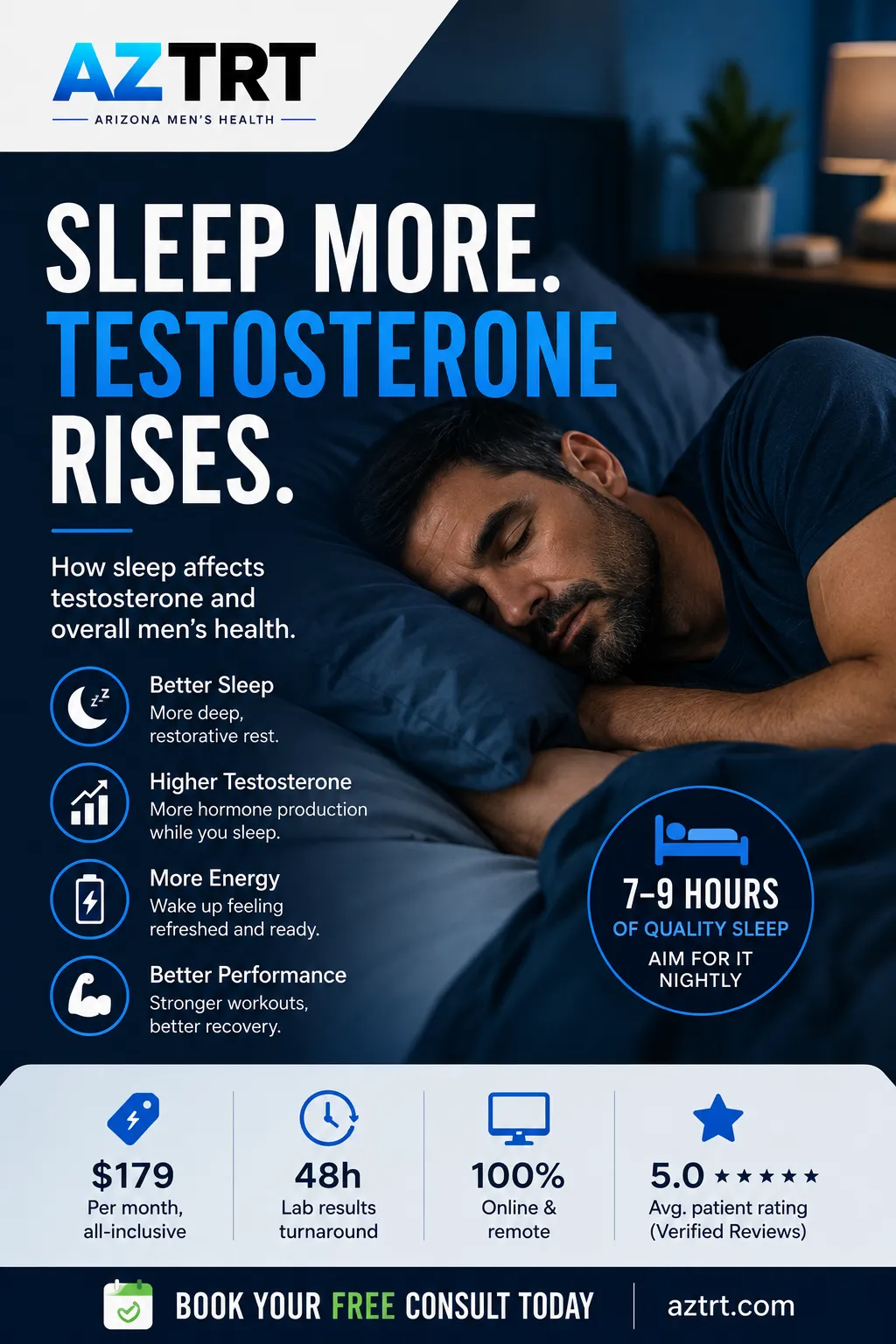
The Link Between Sleep and Testosterone Levels
Testosterone production is closely tied to sleep — more specifically, to the deep and REM stages of sleep that happen mostly in the second half of the night. Skimp on sleep, and hormone production takes a hit.
The research in brief
Studies have shown that men who sleep five hours a night for a week can see meaningful drops in daytime testosterone levels compared to a full night's rest. Most testosterone release happens during sleep, so cutting sleep short doesn't just leave you tired — it can directly affect hormone output.
Why this cycle matters
Low testosterone can also disrupt sleep, creating a feedback loop: poor sleep lowers testosterone, and low testosterone can contribute to poor sleep quality, fatigue, and even conditions like sleep apnea. Breaking the cycle often means addressing both sides.
Practical steps that help
- Aim for 7–9 hours of sleep on a consistent schedule
- Limit screens and bright light in the hour before bed
- Keep your bedroom cool and dark
- Avoid alcohol close to bedtime — it fragments sleep even if it helps you fall asleep faster
- Get evaluated for sleep apnea if you snore heavily or wake up gasping
When to get checked
If you're sleeping well and still dealing with fatigue, low libido, or other symptoms of low testosterone, it's worth getting bloodwork done. Sleep is one piece of the puzzle, but it isn't the whole picture.
Curious where you stand? You can book a free, no-obligation consult with an Arizona-licensed provider any time — it takes about 60 seconds to get started, and our FAQ covers most of what people ask before their first visit.
If this was useful, you may also want to read our post on Testosterone and Aging: What's Normal vs What's Not, or browse the full AZTRT blog for more Arizona men's health guides.
