
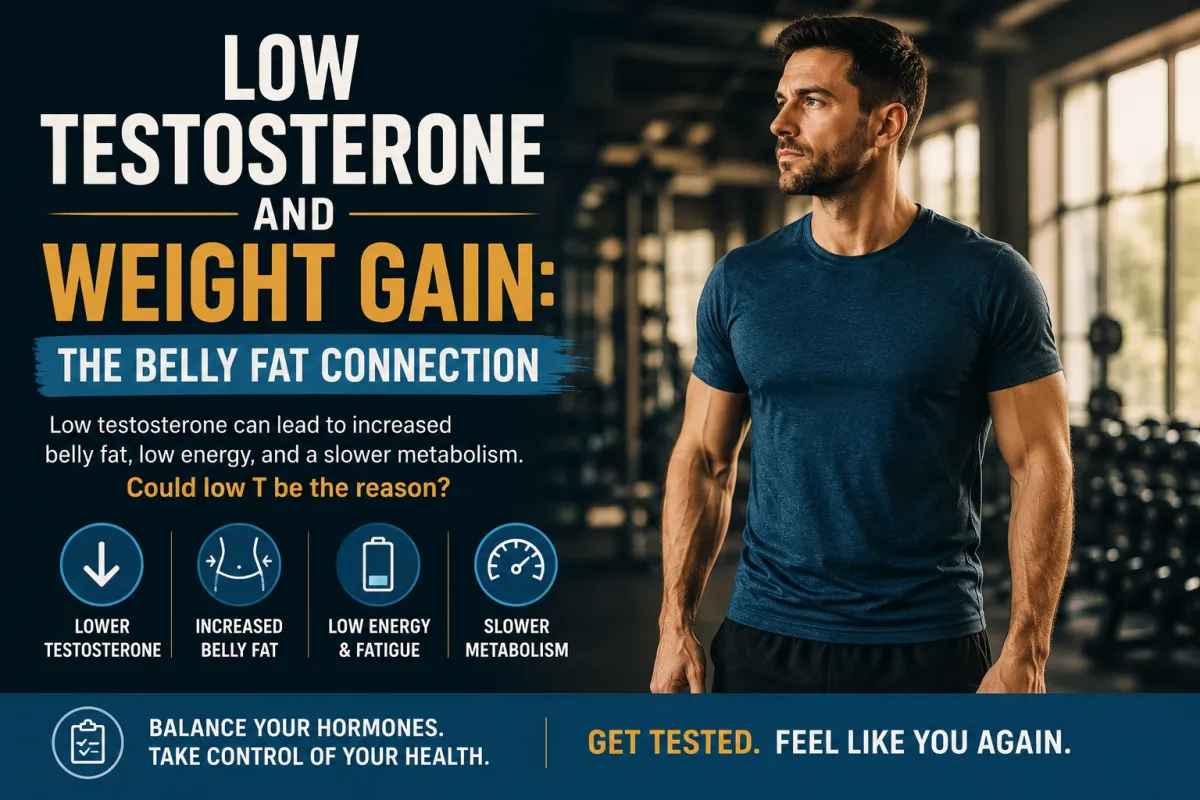
Low Testosterone and Weight Gain: The Belly Fat Connection
If you're gaining weight around the middle despite eating well and exercising, your hormones may be part of the problem. Testosterone plays a major role in how men store fat and build muscle, and when it drops, the scale often goes the wrong way. Here's how the connection works and what you can do about it.
How low testosterone drives weight gain
Testosterone helps maintain lean muscle and influences fat storage. When levels fall, men tend to lose muscle (which lowers metabolism) and store more fat, particularly visceral fat around the abdomen. The result is the stubborn belly fat that resists diet and exercise.
The vicious cycle of belly fat and low T
Here's the frustrating part: abdominal fat contains an enzyme (aromatase) that converts testosterone into estrogen. So the more belly fat you carry, the more your testosterone drops — and the lower your testosterone, the more fat you store. Left unaddressed, this loop is hard to escape through willpower alone.
Find out if you're a candidate for TRT
Doctor-supervised • Arizona-based • Telehealth available
Get Started — Free Assessment →How to break the cycle
The most effective approach attacks both sides at once: build muscle with resistance training, prioritize protein and whole foods, improve sleep, and — if your testosterone is clinically low — address it medically. When low T is treated, many men find that fat loss and muscle gain finally respond to their efforts. Some men also benefit from medical weight-loss support alongside hormone optimization.
When to get tested
If weight gain came with fatigue, low libido, or loss of strength, it's worth checking your testosterone. A simple blood test can reveal whether low T is quietly working against your goals.
Get your testosterone tested
Doctor-supervised • Arizona-based • Telehealth available
Get Started — Free Assessment →Frequently asked questions
Can low testosterone cause belly fat?
Yes. Low testosterone promotes fat storage and muscle loss, and belly fat in turn lowers testosterone, creating a self-reinforcing cycle.
Will TRT help me lose weight?
TRT isn't a weight-loss drug, but by restoring muscle and improving body composition it can make fat loss more achievable when combined with training and good nutrition.
How do I know if my weight gain is hormonal?
If it comes with fatigue, low libido, or strength loss, low testosterone may be involved. A blood test confirms it.
