
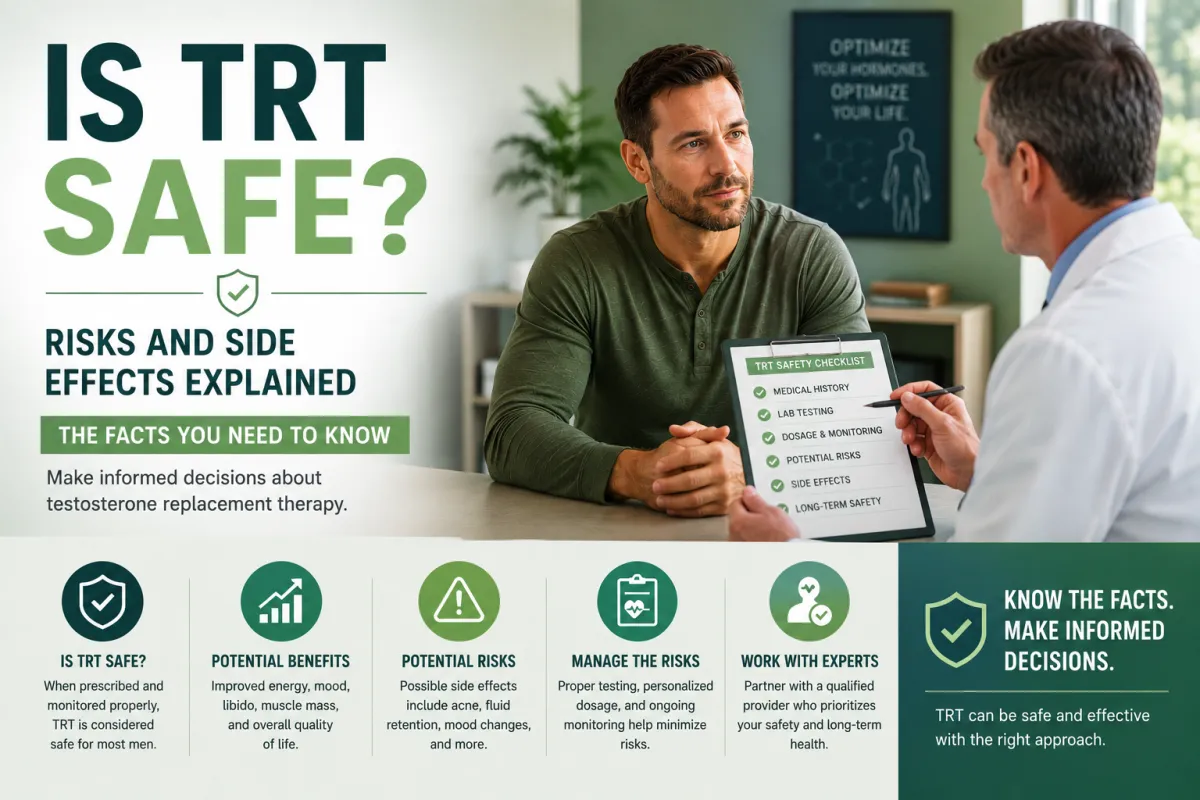
Is TRT Safe? Risks and Side Effects Explained
"Is TRT safe?" is one of the most important questions to ask before starting — and you deserve a straight, balanced answer. Testosterone therapy is well-studied and widely used, but like any prescription treatment it has real considerations. Here's what the evidence shows and how good clinics manage the risks.
The most common side effects
These are usually manageable with monitoring and dose adjustments:
- Higher red blood cell count (hematocrit) — TRT can thicken the blood, so it's checked regularly; dose changes or occasional blood donation resolve it.
- Estrogen-related effects — some testosterone converts to estrogen, which can cause water retention or breast tenderness; this is monitored and managed.
- Acne or oily skin — more common early on.
- Testicular shrinkage and reduced fertility — TRT can lower sperm production; men who want to preserve fertility have options like hCG or enclomiphene.
- Injection-site irritation — for injectable protocols.
What about heart health and prostate?
Cardiovascular safety has been debated for years. More recent research — including a large randomized trial published in 2023 — found that TRT did not increase major cardiac events in men with low testosterone, which was reassuring compared with earlier concerns. On the prostate side, TRT does not appear to cause prostate cancer, but providers monitor PSA and prostate health as a precaution. These are exactly the reasons medical supervision matters.
Find out if you're a candidate for TRT
Doctor-supervised • Arizona-based • Telehealth available
Get Started — Free Assessment →Who should be cautious?
TRT isn't right for everyone. Men with untreated severe sleep apnea, very high red blood cell counts, certain active cancers, or those actively trying to conceive should discuss alternatives and timing with their provider. A thorough evaluation up front is how these situations get caught.
How good clinics keep TRT safe
Safety comes down to process: baseline labs before starting, appropriate dosing, and follow-up bloodwork to track testosterone, estrogen, hematocrit, and PSA. With that monitoring in place, doses are fine-tuned and issues are caught early — which is why supervised TRT looks very different from unmonitored or black-market use.
Start TRT the safe, supervised way
Doctor-supervised • Arizona-based • Telehealth available
Get Started — Free Assessment →Frequently asked questions
Does TRT cause heart problems?
Recent research, including a large 2023 randomized trial, found TRT did not increase major cardiac events in men with low testosterone. Providers still monitor cardiovascular risk factors as a precaution.
Does TRT cause prostate cancer?
Current evidence does not show that TRT causes prostate cancer, but PSA and prostate health are monitored during therapy as a standard precaution.
Will TRT affect my fertility?
TRT can reduce sperm production. Men who want to preserve fertility have options such as hCG or enclomiphene, which should be discussed with a provider before starting.
