
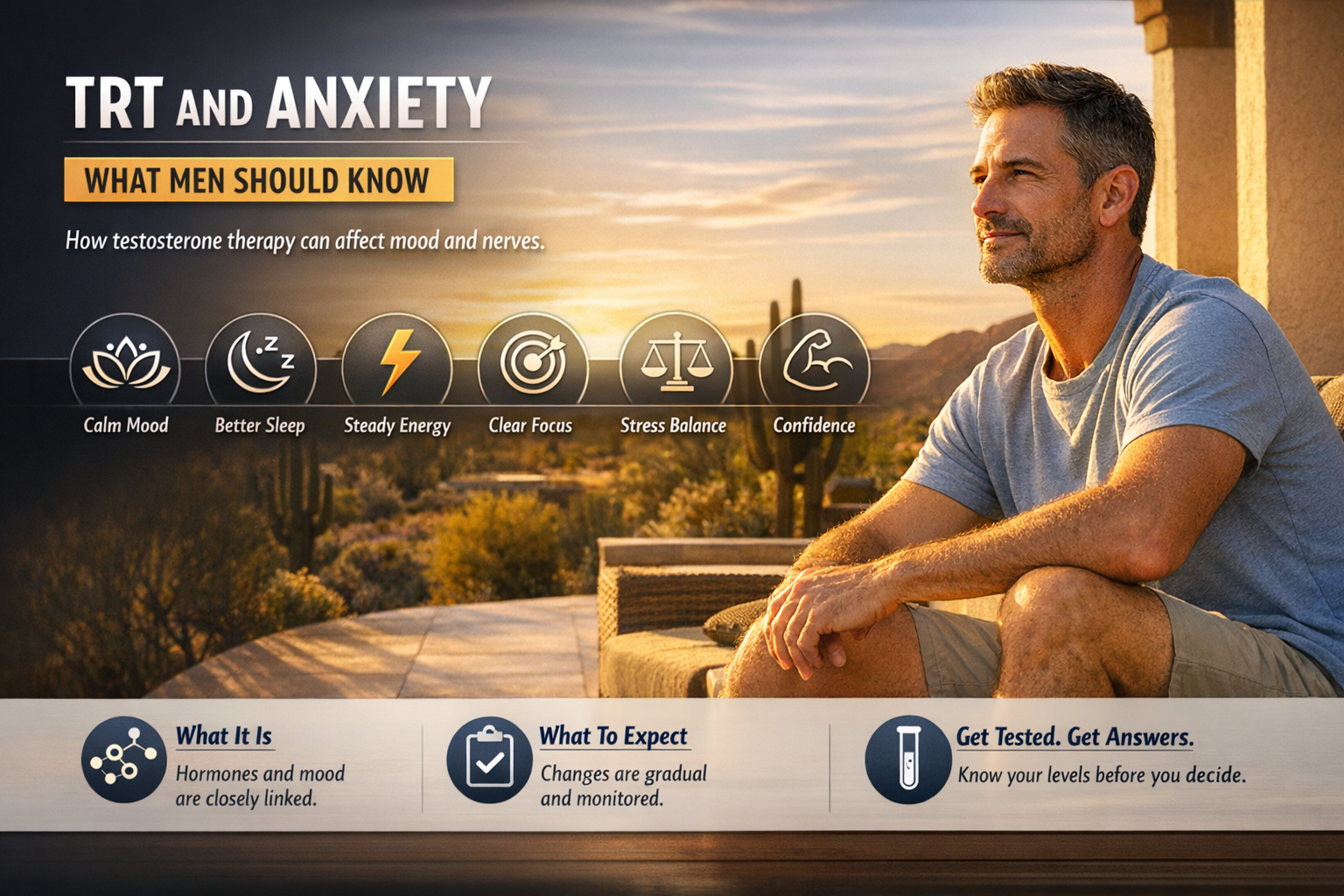
Does TRT Cause Anxiety? What Arizona Men Should Know
If you are wondering does TRT cause anxiety, you are not alone. It is one of the most common worries Arizona men raise before starting testosterone replacement therapy, and one of the most common questions after the first few weeks. The short version: the relationship between testosterone and mood is real, but it usually runs in the helpful direction when therapy is dosed and monitored well.
How testosterone and anxiety are connected
Testosterone acts on brain regions involved in mood, motivation, and stress response. That is why men with low levels often report irritability, low drive, and worry. If you are already noticing those symptoms, our guide on whether low testosterone can cause anxiety explains the overlap in detail.
The research picture is encouraging but not absolute. A systematic review and meta-analysis found testosterone treatment was associated with alleviation of depressive symptoms in men, particularly in men who started with low levels. Anxiety itself has been studied less, and results vary from person to person, so no clinician should promise that TRT will fix anxiety.
Why some men feel anxious after starting TRT
When anxiety shows up on therapy, it is usually tied to something specific rather than testosterone itself. The most common causes include:
- Hormone peaks and valleys. Large, infrequent injections can create a spike a day or two after the dose followed by a crash. Many men feel wired at the peak and flat or worried at the trough.
- Estrogen imbalance. Testosterone converts to estradiol, and levels that run too high or too low can affect mood. See our overview of TRT and estrogen (E2) management.
- Dose that is too high too soon. Overshooting your target range can leave you feeling restless, irritable, or overstimulated.
- Sleep disruption. Poor sleep amplifies anxiety on its own. If you are lying awake, read about TRT and insomnia.
- Life stress and expectations. Starting any treatment while under heavy stress, high caffeine intake, or heavy alcohol use can make normal adjustment feel worse.
Feeling on edge? Find out if your hormones are part of it.
Doctor-supervised • Arizona-based • Telehealth available
Get Started — Free Assessment →How anxiety on TRT is usually fixed
Smooth out the schedule
More frequent, smaller doses often steady blood levels and reduce the mood swings tied to peaks and troughs. Timing of your blood draw also matters for interpreting results correctly; our post on TRT peak vs. trough blood draws shows how to read your labs in context.
Check labs, not guesses
The Endocrine Society guideline on testosterone therapy in men with hypogonadism emphasizes confirming a diagnosis with symptoms plus consistently low morning levels, then monitoring after treatment starts. Total and free testosterone, estradiol, and hematocrit give your provider the information to adjust your protocol instead of guessing.
Support the basics
Consistent sleep, limited caffeine and alcohol, regular training, and sunlight all support mood. Arizona men can use the cooler morning hours for outdoor exercise during the hotter months, which helps both stress and sleep.
Know the normal risks and monitoring
Like any prescription therapy, TRT has potential side effects. Mayo Clinic outlines the potential benefits and risks of testosterone therapy and why ongoing follow-up with a provider is important. Mood changes are worth reporting early rather than waiting them out.
When to talk to a provider
Reach out promptly if anxiety is new, getting worse, or accompanied by panic attacks, chest tightness, or trouble functioning at work or home. Anxiety can have many causes unrelated to hormones, including thyroid problems, sleep apnea, medications, and stress, and a good clinic will screen for these rather than assume. If you ever have thoughts of harming yourself, contact emergency services or the 988 Suicide and Crisis Lifeline right away. If you feel generally worse after starting, our guide on why you might feel worse after starting TRT walks through the usual causes and fixes.
Get answers from an Arizona provider who monitors your labs.
Doctor-supervised • Arizona-based • Telehealth available
Get Started — Free Assessment →Frequently asked questions
Can testosterone therapy make anxiety worse?
It can for some men, usually because of hormone peaks and troughs, high estrogen, or a dose that is too aggressive. These causes are typically correctable with lab-guided changes to dose, frequency, or estrogen management.
Can TRT help with anxiety caused by low testosterone?
Some men with clinically low testosterone notice calmer, more stable mood once levels are restored, but results vary and TRT is not a treatment for anxiety disorders. If anxiety is your main concern, your provider may recommend evaluating other causes as well.
How long does TRT-related jitteriness last?
Mild restlessness often settles within the first several weeks as your body adjusts and your protocol is fine-tuned. If it persists or is intense, contact your provider so your labs and dosing can be reviewed.
Sources
- Association of Testosterone Treatment With Alleviation of Depressive Symptoms in Men: A Systematic Review and Meta-analysis — PMC (NIH)
- Testosterone Therapy in Men With Hypogonadism: An Endocrine Society Clinical Practice Guideline — PubMed
- Testosterone therapy: Potential benefits and risks as you age — Mayo Clinic
