
Can Low Testosterone Cause Anxiety? The Link Explained
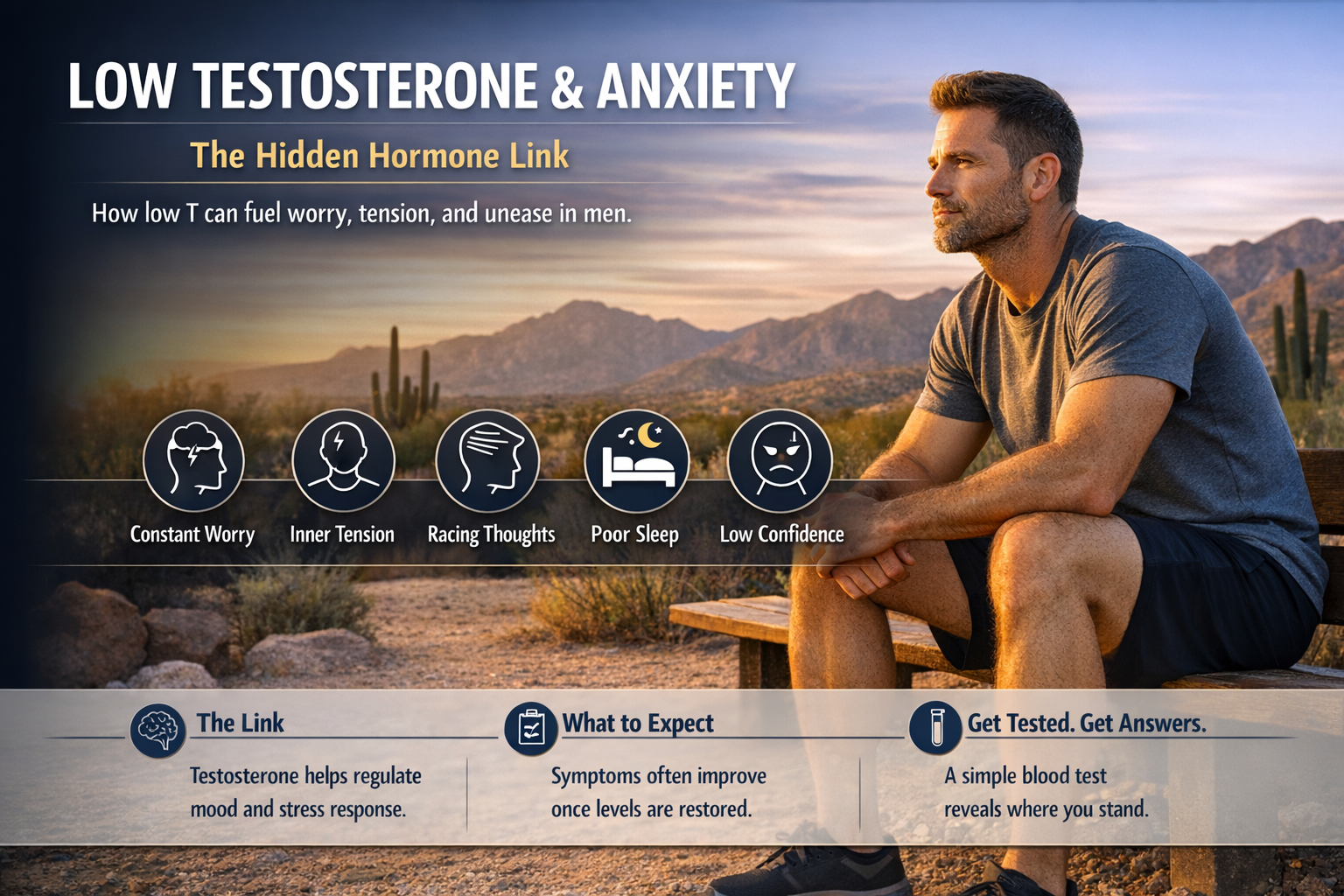
Can low testosterone cause anxiety? It's a question more Arizona men are asking — and the answer is yes, it can. While most men associate low testosterone with fatigue or low libido, research shows testosterone plays a real role in how the male brain handles stress. When levels fall, some men develop a persistent, hard-to-explain anxiety: constant worry, tension in the chest, restlessness at night, and a sense of unease that doesn't match anything actually going wrong in their life.
If that sounds familiar, this guide explains how testosterone and anxiety are connected, how to tell whether your symptoms might be hormonal, and how men in Phoenix, Scottsdale, Mesa, and across Arizona can get tested without leaving home.
How testosterone affects anxiety in men
Testosterone isn't just a muscle-and-libido hormone. Receptors for testosterone are found throughout the brain, including in regions that regulate fear and stress — most notably the amygdala, the brain's threat-detection center. Research suggests testosterone has a calming, anxiety-buffering effect in several ways:
- It dampens the threat response. Healthy testosterone levels appear to reduce amygdala over-reactivity, so everyday stressors feel more manageable rather than alarming.
- It interacts with GABA. Some of testosterone's metabolites act on GABA receptors — the same calming pathway targeted by anti-anxiety medications.
- It balances cortisol. Testosterone and cortisol (the stress hormone) exist in a push-pull relationship. When testosterone drops, cortisol's effects can dominate, leaving you feeling wired, tense, and on edge.
- It supports mood neurotransmitters. Testosterone influences serotonin and dopamine signaling, both of which affect anxiety, motivation, and emotional resilience.
Put simply: when testosterone is where it should be, your nervous system has a stronger "brake." When it's low, that brake weakens — and worry, irritability, and restlessness can creep in.
What low-testosterone anxiety feels like
Anxiety from low T rarely shows up alone. It usually arrives alongside other classic low-testosterone symptoms, which is one of the biggest clues that hormones — not just life stress — may be involved. Men often describe:
- A new or worsening baseline of worry and inner tension, without a clear trigger
- Racing thoughts at night and trouble falling or staying asleep
- Irritability and a shorter fuse than usual
- Loss of confidence and increased self-doubt, especially at work
- Fatigue, low motivation, and brain fog during the day
- Reduced sex drive or performance concerns — which then feed more anxiety
Notice the pattern: anxiety, sleep problems, fatigue, and low libido tend to cluster together when testosterone is the underlying issue. If you're only anxious — with normal energy, sleep, and libido — a hormonal cause is less likely, though still worth ruling out.
Anxious, Wired, and Worn Out? Your Hormones Could Be Why.
Arizona-licensed providers • Arizona-based • Telehealth available
Get Started — Free Assessment →What the research says
Studies consistently find an association between low testosterone and higher rates of anxiety and depressive symptoms in men. Men with hypogonadism (clinically low testosterone) report more anxiety than men with normal levels, and animal research shows testosterone administration has a measurable anxiolytic — anxiety-reducing — effect mediated through the brain pathways described above.
It's important to be honest about the limits of the evidence, though. Anxiety is multifactorial: genetics, life stress, sleep debt, caffeine and alcohol, thyroid problems, and mental health conditions all contribute. Testosterone therapy is not an anti-anxiety medication, and no reputable clinic should promise it will cure anxiety. What the evidence supports is this: in men with confirmed low testosterone, restoring levels to a healthy range often improves mood, stress tolerance, sleep, and overall sense of well-being — and anxiety frequently eases as part of that broader improvement.
The vicious cycle: anxiety and low T feed each other
The relationship runs in both directions. Chronic anxiety and stress elevate cortisol — and sustained high cortisol suppresses the signaling chain (hypothalamus → pituitary → testes) that tells your body to produce testosterone. Poor sleep, which anxiety commonly causes, suppresses testosterone production even further, since most daily testosterone is made during deep sleep.
That creates a loop many Arizona men know all too well: low T fuels anxiety → anxiety wrecks sleep → poor sleep lowers testosterone further → anxiety gets worse. Breaking the loop starts with finding out where your levels actually stand.
How to find out if your anxiety is hormonal
The good news: this is one of the easiest possibilities to check. A proper evaluation includes:
- A morning blood draw — testosterone peaks early in the day, so labs should be drawn before about 10 a.m. for an accurate reading.
- Total and free testosterone — free testosterone matters because it's the fraction actually available to your brain and tissues.
- Supporting labs — thyroid function, estradiol, and other markers help rule out non-testosterone causes of anxiety and fatigue.
- A symptom review with a licensed provider — numbers alone don't tell the whole story; symptoms plus labs together drive the diagnosis.
For men in Arizona, this doesn't require sitting in a waiting room. AZTRT operates via telehealth across the state — Phoenix, Scottsdale, Tempe, Chandler, Gilbert, Mesa, Tucson, and beyond — with quick lab draws at a location near you and results reviewed by a medical provider from home.
Treatment options if low T is confirmed
If bloodwork confirms low testosterone alongside your symptoms, a physician-supervised plan may include testosterone replacement therapy (TRT), with regular follow-up labs to keep levels — and related markers like estradiol and hematocrit — in a healthy range. Many men report that as energy, sleep, and drive return over the first weeks and months of treatment, the background hum of anxiety quiets down as well.
Lifestyle work multiplies the benefit and matters whether or not you start TRT: consistent sleep, strength training, limiting alcohol, managing caffeine, and stress-reduction practices all support both healthy testosterone and a calmer nervous system. And if anxiety is severe or persists despite normal hormone levels, working with a mental health professional is the right move — hormones are one piece of the puzzle, not the whole picture.
Stop Guessing. A Simple Blood Test Gives You Answers.
Arizona-licensed providers • Arizona-based • Telehealth available
Get Started — Free Assessment →Frequently asked questions
Can low testosterone cause panic attacks?
Low testosterone is more commonly linked to persistent background anxiety, irritability, and poor stress tolerance than to classic panic attacks. That said, the sleep disruption and heightened stress reactivity that come with low T can make panic symptoms more likely in men who are prone to them. If you're having panic attacks, get evaluated by a medical provider — checking hormones is a reasonable part of that workup.
Will TRT help my anxiety?
If your anxiety is connected to clinically low testosterone, many men notice their mood, stress tolerance, and sleep improve over the first several weeks to months of doctor-supervised TRT, and anxiety often eases as part of that. TRT is not an anxiety medication, however, and it won't help if your levels are already normal. Bloodwork first, treatment second.
How do I get my testosterone tested for anxiety symptoms in Arizona?
Book a telehealth visit with an Arizona-licensed provider, then complete a quick morning blood draw at a lab location near you in the Phoenix metro, Tucson, or elsewhere in the state. The panel should include total and free testosterone plus supporting markers. AZTRT handles the entire process online, with results reviewed one-on-one with a medical provider.
