
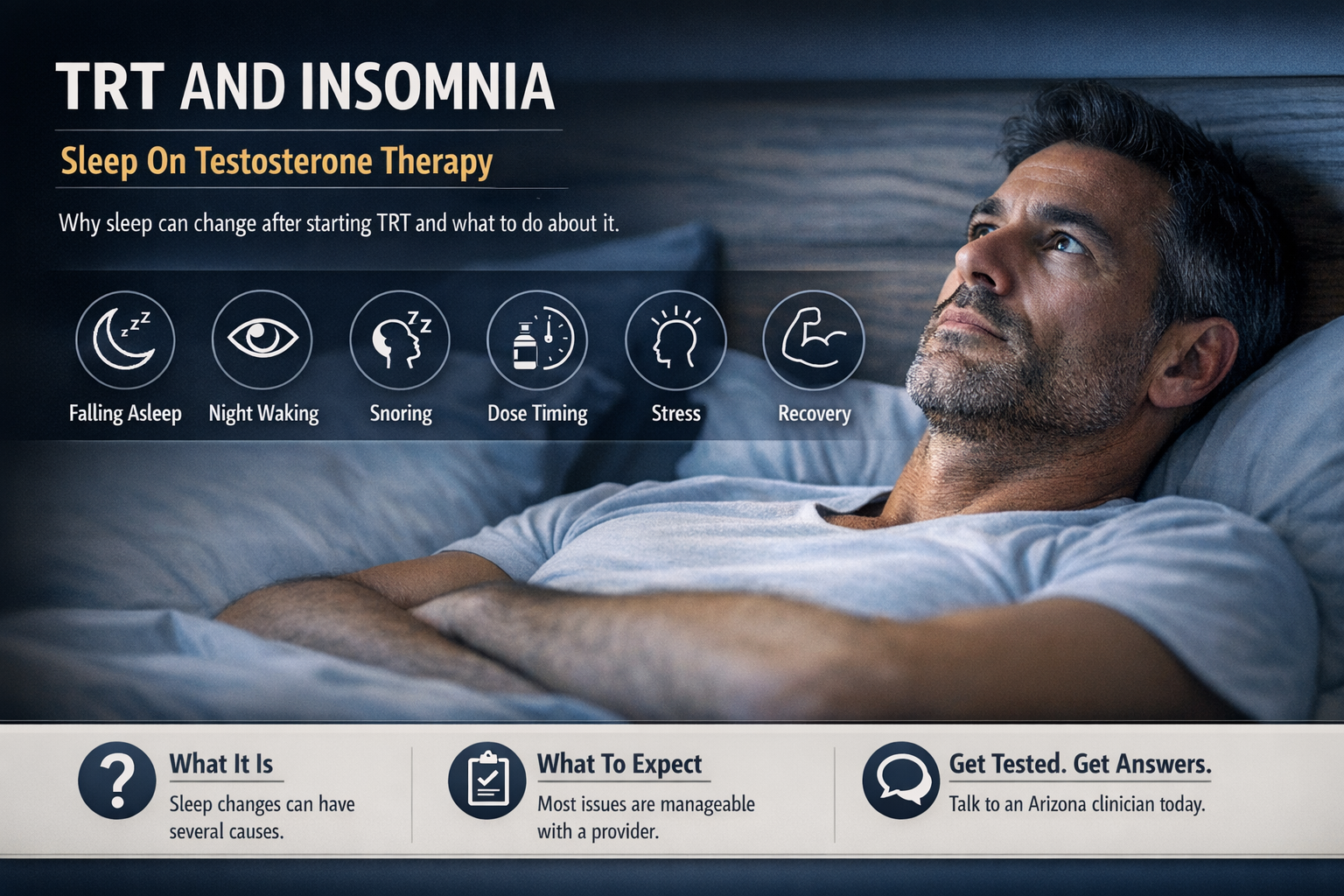
Does TRT Cause Insomnia? Sleep Problems on Testosterone
If you started testosterone replacement therapy (TRT) hoping for better energy and instead find yourself staring at the ceiling at 2 a.m., you are not alone. So, does TRT cause insomnia? For most Arizona men the honest answer is: sometimes it can be involved, but it is rarely the whole story. Sleep is influenced by hormones, stress, weight, breathing, heat, and habits, and TRT touches several of those at once.
How testosterone and sleep are connected
Testosterone and sleep influence each other. Research reviewing the evidence notes that sleep disorders and testosterone levels are closely related in men, with poor sleep associated with lower testosterone and low testosterone associated with poorer sleep. That two-way cycle is why many men with low T report fragmented, unrefreshing sleep before they ever start treatment. We break that cycle down in our guide to low testosterone and poor sleep.
Because of this link, the goal of TRT is often to improve sleep, not harm it. Still, individual responses vary, and the first few weeks of therapy can be a period of adjustment.
Why some men have trouble sleeping on TRT
1. Dose timing and injection schedule
Testosterone can be stimulating for some men. Taking an injection late in the evening, or having large peaks and dips between doses, may leave some men feeling wired at night or restless before the next dose. Adjusting the time of day, or splitting the weekly dose into smaller, more frequent injections, often smooths this out. See how TRT injection frequency affects steadiness of levels.
2. Estrogen (E2) shifts
Some testosterone converts to estradiol. When estrogen runs too high or swings up and down, some men report night sweats, anxiety, or disrupted sleep. Monitoring and, when appropriate, adjusting therapy is part of good care. Read more about TRT and estrogen management.
2b. Higher red blood cell counts
TRT can raise hematocrit in some men, which is why regular bloodwork is part of every responsible protocol. Your provider tracks this so it stays in a safe range.
3. Sleep apnea that was already there
Untreated obstructive sleep apnea is common in men, especially those carrying extra weight, and it can cause repeated awakenings, loud snoring, and daytime exhaustion. A review of the topic explains that obstructive sleep apnea and testosterone deficiency frequently overlap, and a separate clinical review looks at how testosterone therapy and sleep apnea interact. If you snore heavily, wake gasping, or feel unrested despite a full night in bed, ask about screening. We cover this in detail in TRT and sleep apnea.
4. Everything else that wrecks sleep
Caffeine, alcohol, evening screens, stress, and Arizona summer heat all affect sleep regardless of hormones. A bedroom that is too warm is a surprisingly common culprit in Phoenix, Scottsdale, and Mesa from May through September.
Not Sleeping Well? Find Out if Low T Is Involved
Doctor-supervised • Arizona-based • Telehealth available
Get Started — Free Assessment →What to do if you can't sleep on TRT
- Tell your provider early. Do not just stop treatment. Small adjustments to dose, timing, or frequency often solve the problem.
- Move injections earlier in the day. Morning or early-afternoon dosing is a simple first experiment.
- Get labs checked. Testosterone, estradiol, and hematocrit give your clinician useful clues. If you need a refresher, see how to get your testosterone tested in Arizona.
- Screen for sleep apnea. Especially if you snore, have a larger neck size, or wake unrefreshed.
- Tighten sleep basics. Cool, dark room, consistent bedtime, no caffeine after midday, and limited alcohol.
When to call your clinician right away
Contact your provider promptly if you have severe or persistent insomnia, pauses in breathing at night, chest pain, shortness of breath, or significant mood changes. These deserve an evaluation rather than waiting it out.
Bottom line
Insomnia is not a guaranteed side effect of TRT, and for many men sleep improves once hormones are optimized. When sleep does get worse, the cause is usually identifiable and manageable: dose timing, estrogen balance, an underlying sleep disorder, or lifestyle factors. Working with a doctor-supervised Arizona TRT program means those questions get answered with real lab data instead of guesswork.
Ready to Sleep, Feel, and Perform Better?
Doctor-supervised • Arizona-based • Telehealth available
Get Started — Free Assessment →Frequently asked questions
Does TRT cause insomnia?
Not usually. Some men notice restless or lighter sleep in the first weeks, often related to dose timing or hormone swings, and many others sleep better. If it persists, your provider can adjust your protocol.
Can I take my testosterone injection at night?
You can, but some men find evening dosing stimulating. Many clinicians suggest morning or early-afternoon injections first, then adjust based on how you feel.
Can TRT make sleep apnea worse?
Testosterone therapy and sleep apnea can interact, and men with untreated or severe sleep apnea need screening and monitoring. Tell your provider if you snore, stop breathing at night, or feel exhausted despite enough time in bed.
Sources
