
Why Do I Feel Worse After Starting TRT? Causes & Fixes
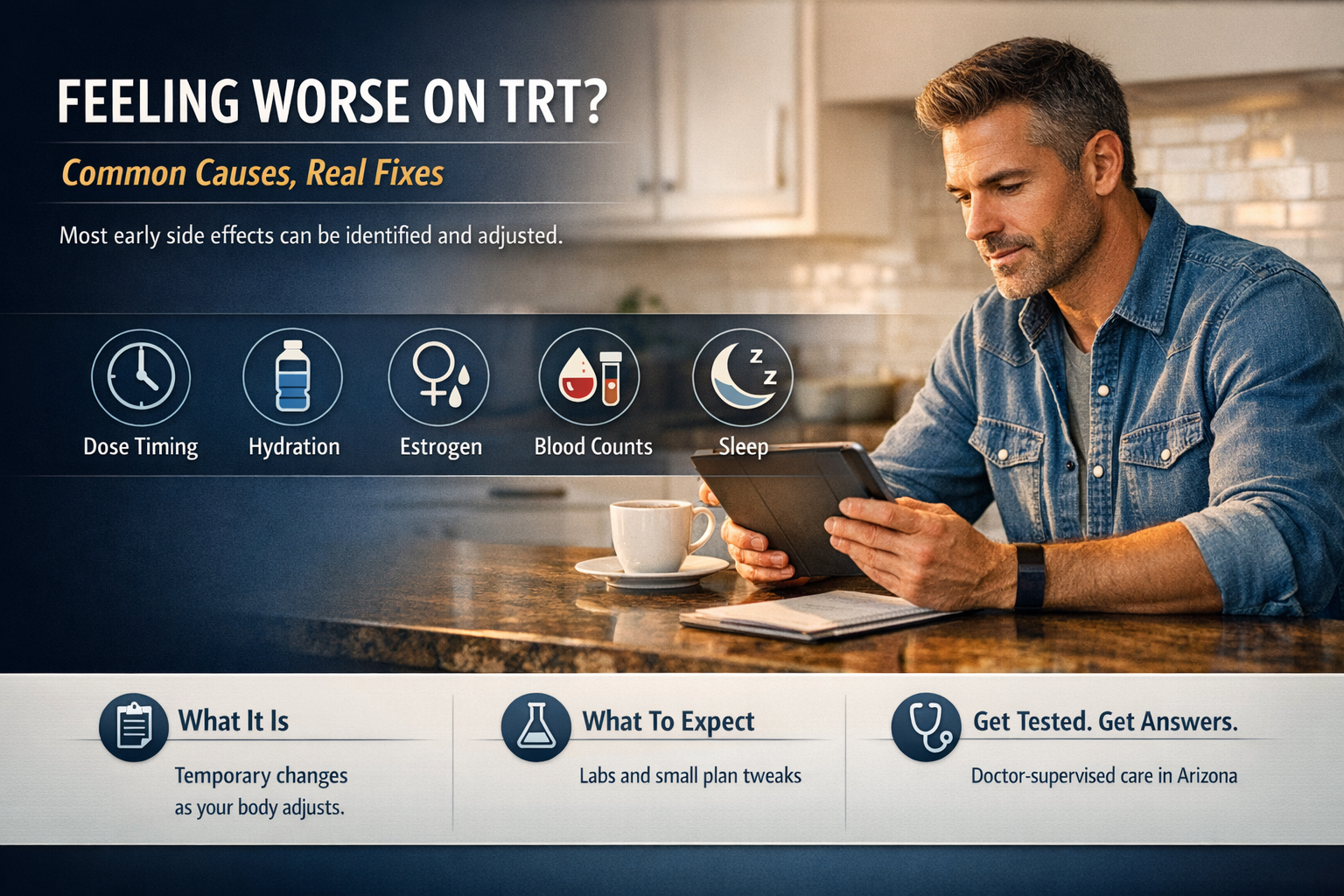
If you are asking "why do I feel worse after starting TRT?", you are not alone. Many Arizona men expect to feel better right away, and when they feel tired, bloated, moody, or just off, it is natural to worry. In most cases the cause can be identified and corrected, and the first step is understanding what testosterone therapy is changing in your body.
Is it normal to feel worse before you feel better on TRT?
For some men, yes, for a short window. Your body has been running on low testosterone for months or years, and restoring it shifts sleep, fluid balance, skin, and mood regulation. Benefits like better energy, mood, and libido typically build gradually, as covered in our realistic TRT timeline. Early on, you may feel changes that are not yet the benefits you were hoping for.
That said, "normal adjustment" has limits. A clinical review of TRT adverse effects describes specific, manageable issues, including raised red blood cell counts, elevated estradiol, acne, and fluid retention, each with a recommended response. Feeling bad is a signal to investigate, not to endure.
The most common reasons men feel worse on TRT
1. A dose or schedule that does not fit you
Too much testosterone at once, or large swings between weekly injections, can leave you wired and irritable at the peak and flat at the trough. Smaller, more frequent doses often smooth this out. If you are unsure whether your dose is right, see our guide to how much testosterone is the right TRT dose.
2. Fluid retention and bloating
Testosterone can cause the body to hold sodium and water, leading to puffiness, weight jumps, and in some men a rise in blood pressure. The review above notes that sodium restriction, monitoring fluid intake, and regular blood pressure checks are standard management. Read more in our article on TRT water retention and bloating.
3. Estrogen running high
Some testosterone converts to estradiol. When estradiol climbs too high, men may notice moodiness, water retention, low libido, or breast tenderness. The same review links gynecomastia with estradiol above roughly 60 pg/mL and describes options that include dose changes or, in selected cases, an aromatase inhibitor. Our explainer on TRT and estrogen (E2) management walks through this in detail.
Still Feeling Off on TRT? Get Your Labs Reviewed
Doctor-supervised • Arizona-based • Telehealth available
Get Started — Free Assessment →4. Rising red blood cell counts
Testosterone stimulates red blood cell production. Research on erythrocytosis following testosterone therapy shows this is a recognized effect that needs monitoring. Elevated hematocrit can contribute to headaches, flushing, fatigue, or a heavy, foggy feeling. It is detected only through bloodwork, which is why hematocrit monitoring on TRT is non-negotiable. The clinical review recommends checking hematocrit every 3 to 6 months at first, then yearly, with dose reduction, more frequent smaller injections, or phlebotomy when levels get too high.
5. Poor sleep or undiagnosed sleep apnea
If you wake up unrested, snore, or feel exhausted despite treatment, sleep apnea may be the culprit. Untreated obstructive sleep apnea can cause low oxygen at night, which may push hematocrit higher, and screening before starting therapy is recommended. See TRT and sleep apnea: is it safe if you snore? for what to ask your provider.
6. Skin changes
Testosterone increases oil gland activity, so breakouts on the face, chest, or back are common. Mild to moderate acne is usually handled with topical treatments, and persistent cases deserve a dermatology conversation.
7. Symptoms that were never really about testosterone
Fatigue, low mood, and poor focus have many causes, including thyroid problems, depression, poor sleep, alcohol, and stress. If symptoms do not improve once your levels are in a healthy range, your provider should look beyond testosterone.
What to do if you feel worse after starting TRT
- Do not stop or double your dose on your own. Abrupt changes can make symptoms worse.
- Write down what you feel and when. Note whether symptoms cluster the day after injection or just before the next one.
- Get follow-up labs. Total and free testosterone, estradiol, hematocrit, and PSA (where appropriate) guide adjustments. Published guidelines for male hypogonadism emphasize ongoing monitoring after treatment starts.
- Ask about adjusting the plan. Dose, injection frequency, and formulation can all be changed.
- Check lifestyle factors. Sleep, alcohol, hydration, salt intake, and training load all affect how you feel.
Why monitoring matters, especially in Arizona
Phoenix summers add dehydration and heat stress, which can amplify fatigue, headaches, and swelling and may nudge hematocrit upward. Staying hydrated and getting regular labs at a local Arizona lab or through a telehealth-based clinic keeps small problems from becoming big ones. A doctor-supervised program is designed to catch exactly these issues early.
Feel Better on Your TRT Plan — Talk to an Arizona Provider
Doctor-supervised • Arizona-based • Telehealth available
Get Started — Free Assessment →Frequently asked questions
Is it normal to feel worse when you first start TRT?
Some men notice temporary changes such as mild fluid retention, skin oiliness, or sleep disruption in the first weeks while the body adjusts. Persistent or worsening symptoms are not something to push through, though. Tell your provider so your dose, injection schedule, and labs can be reviewed.
Can TRT make you tired or moody at first?
It can happen, often because hormone levels are swinging between injections, because of poor sleep or untreated sleep apnea, or because the dose is not a good fit. Most of these causes are fixable with a schedule or dose adjustment guided by bloodwork.
When should I call my TRT provider about side effects?
Contact your provider promptly for chest pain, shortness of breath, leg swelling or pain, severe headaches, or sudden vision or speech changes, and seek emergency care for those. For milder issues like acne, bloating, or poor sleep, report them at your next check-in or sooner if they bother you.
Sources
