
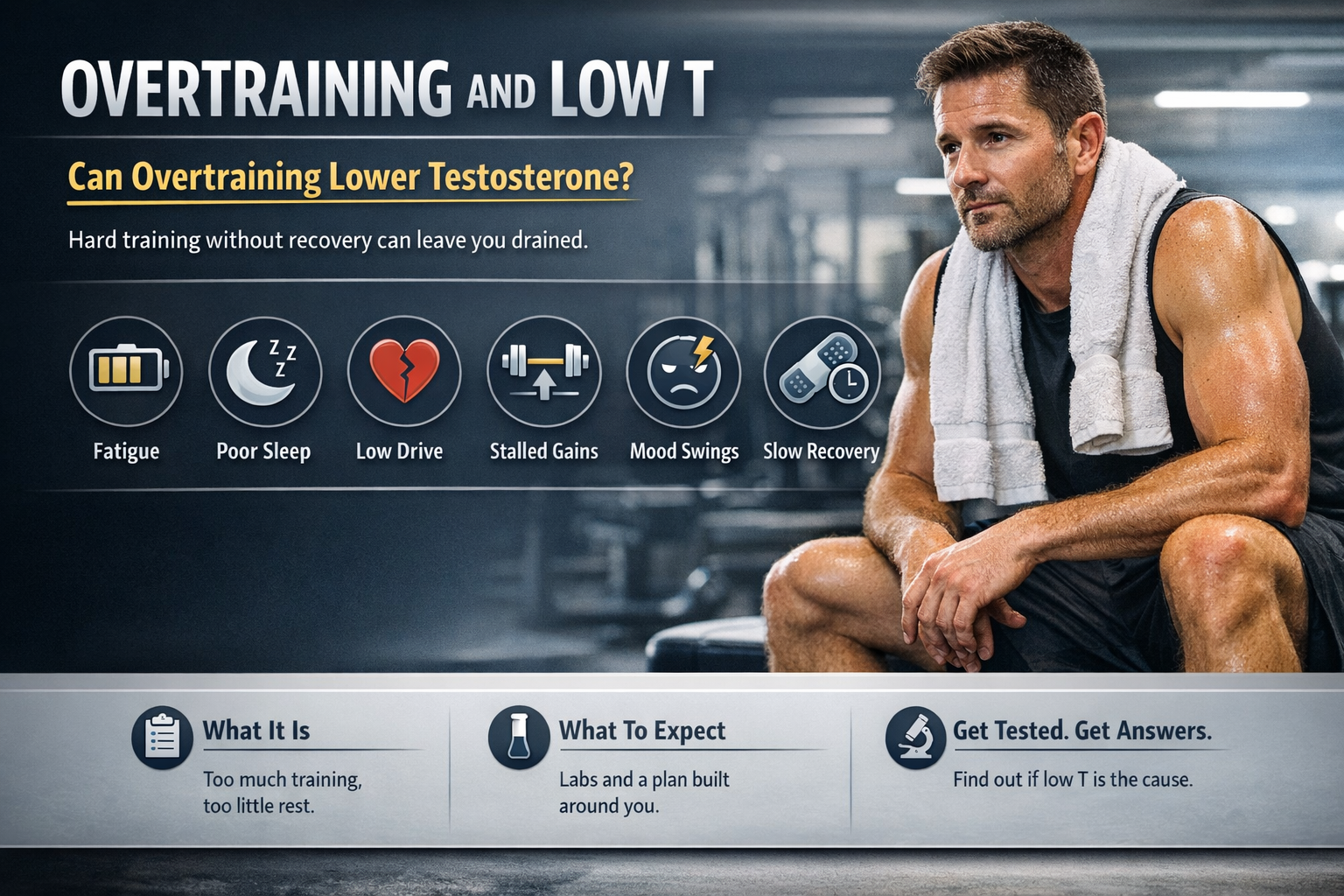
Can Overtraining Cause Low Testosterone? Signs & Recovery
If you train hard and feel worse instead of stronger, you may be asking: can overtraining cause low testosterone? For many Arizona men grinding through Phoenix gym sessions, early-morning runs, and summer heat, the answer is yes, it can contribute. Here is how it works, the warning signs, and when it is time to get tested.
How exercise affects testosterone
Moderate training is generally good for hormones. A 2026 narrative review in Sports Health found that moderate-to-high intensity free-weight resistance exercise is among the most effective exercise strategies for supporting testosterone, while sleep and adequate nutrition also matter. The problem begins when the load keeps climbing and recovery does not keep up.
Researchers describe a spectrum. A review of hypogonadism in exercising males frames low testosterone in some athletes as a possible adaptive-regulatory adjustment rather than a simple disease, often tied to low energy availability, meaning not enough fuel for the work being done. In plain terms, your brain may turn down the signal to the testes when it senses the body is under too much strain.
Signs your training may be hurting your hormones
- Performance plateau or decline: weights stall, times slow, and recovery drags. If you are losing muscle despite working out, hormones are one of several things worth checking.
- Persistent fatigue and poor sleep: feeling wired but tired is a classic overreaching pattern.
- Low drive and mood changes: reduced motivation, irritability, and lower libido.
- Frequent illness or nagging injuries: a sign recovery is not keeping pace.
- Unintended weight loss: often points to eating too little for your training.
These symptoms overlap with many other conditions, including thyroid problems, depression, and sleep apnea, so they are not proof of low testosterone on their own.
What the research says about overtraining and hormones
A systematic review of hormonal aspects of overtraining syndrome examined how stress hormones and sex hormones change in overtrained athletes. The findings were mixed, and no single hormone reliably diagnoses overtraining, which is why symptoms, training history, and labs should be interpreted together rather than in isolation.
The takeaway: overtraining is real, hormones can shift, but the picture is individual. A man with truly low testosterone and symptoms needs a proper workup, not guesswork.
Training Hard but Feeling Flat? Check Your Levels
Doctor-supervised • Arizona-based • Telehealth available
Get Started — Free Assessment →Common reasons training can lower testosterone
Not eating enough
Calorie restriction while training heavily is one of the most common drivers. Cutting for a summer event while adding volume can tip your energy balance too far.
Not sleeping enough
Testosterone release is closely tied to sleep. Our guide on the link between sleep and testosterone explains why short or broken sleep can undercut your gains, and the Sports Health review also highlights sleep as a key factor.
Too little recovery
Muscle is built during rest, not in the gym. Read what actually helps with muscle recovery and testosterone for practical habits.
Arizona heat and dehydration
Training outdoors in extreme heat adds physical stress. Hydration, electrolytes, and shifting hard sessions to cooler hours help your body recover.
How to recover if you suspect overtraining
- Reduce volume and intensity for one to three weeks, keeping light movement.
- Eat enough protein and total calories to match your training.
- Prioritize seven to nine hours of sleep.
- Schedule rest days and a planned deload every several weeks.
- Reassess symptoms after a genuine recovery period.
When to get your testosterone tested
If symptoms persist after you have rested, eaten, and slept properly, or if they are severe, ask for testing. The Endocrine Society guideline on testosterone therapy in men with hypogonadism recommends diagnosing low testosterone only when symptoms are present and morning fasting testosterone is confirmed low on repeat testing. You can learn how low testosterone is diagnosed and what level is considered low before you go.
Active men who do have confirmed low testosterone have options too. See our guide to TRT for athletes and active men for how treatment, monitoring, and competition rules fit together. Importantly, TRT is not a fix for an unsustainable training plan, and it is a prescription therapy that requires medical supervision.
Get Answers About Your Testosterone
Doctor-supervised • Arizona-based • Telehealth available
Get Started — Free Assessment →Frequently asked questions
Can overtraining cause low testosterone?
It can contribute. Research on exercising men suggests that very high training loads combined with too little food, sleep, or recovery can lower testosterone, and that this is often reversible once the imbalance is corrected. Persistent symptoms with confirmed low labs deserve a medical evaluation.
How long does it take testosterone to recover after overtraining?
It varies. Some men see improvement within weeks of reducing training volume, eating enough, and sleeping better, while others take months. If symptoms and labs have not improved after a genuine recovery period, ask a clinician to look for other causes.
Should I take TRT if I am overtrained?
Not as a first step. Because exercise-related low testosterone can be functional, the usual approach is to fix the training, nutrition, and sleep first and repeat morning labs. TRT is considered only when low testosterone is confirmed with symptoms and a clinician decides it is appropriate.
Sources
- Testosterone-Optimizing Strategies in Athletes — Sports Health (PubMed)
- Hypogonadism in Exercising Males: Dysfunction or Adaptive-Regulatory Adjustment? — PubMed Central
- Hormonal aspects of overtraining syndrome: a systematic review — PubMed Central
- Testosterone Therapy in Men With Hypogonadism: Clinical Practice Guideline — Endocrine Society
