
What Bloodwork Do You Need Before Starting TRT? AZ Guide
If you are considering testosterone therapy, the first question is usually, "what bloodwork do you need before starting TRT?" The short version: a proper diagnosis requires confirmed low testosterone and a clear baseline so your provider can treat you safely and track changes. For Arizona men, that is a simple morning blood draw at a local lab, and it can be ordered after a telehealth visit.
Below is what gets tested, why each marker matters, and how to prepare so your results are accurate.
Why Bloodwork Comes Before Any Prescription
Symptoms like fatigue, low libido, and brain fog overlap with sleep problems, thyroid issues, depression, and diabetes. Lab work separates true testosterone deficiency from look-alikes. Clinical guidance from the Endocrine Society recommends diagnosing hypogonadism only when symptoms are paired with consistently low testosterone measurements, not from symptoms alone or a single random result.
Baseline labs also give you a "before" snapshot. Once therapy starts, your provider compares every future result against it, which is the foundation of bloodwork monitoring on TRT.
Step 1: Confirm Low Testosterone With Morning Tests
Testosterone runs highest in the morning and drops through the day, so timing matters. The American Urological Association guideline says testosterone deficiency should be based on repeated early-morning total testosterone measurements alongside symptoms. In practice, that means two separate morning draws, usually before 10 a.m.
Levels can swing day to day, and illness, poor sleep, or a recent big meal can shift results. Two readings prevent you from being diagnosed (or dismissed) on a fluke. To understand where the cutoffs fall, see our guide on what testosterone level is considered low.
Step 2: The Core Baseline Panel
Once low testosterone is confirmed, or as part of your initial workup, expect these tests:
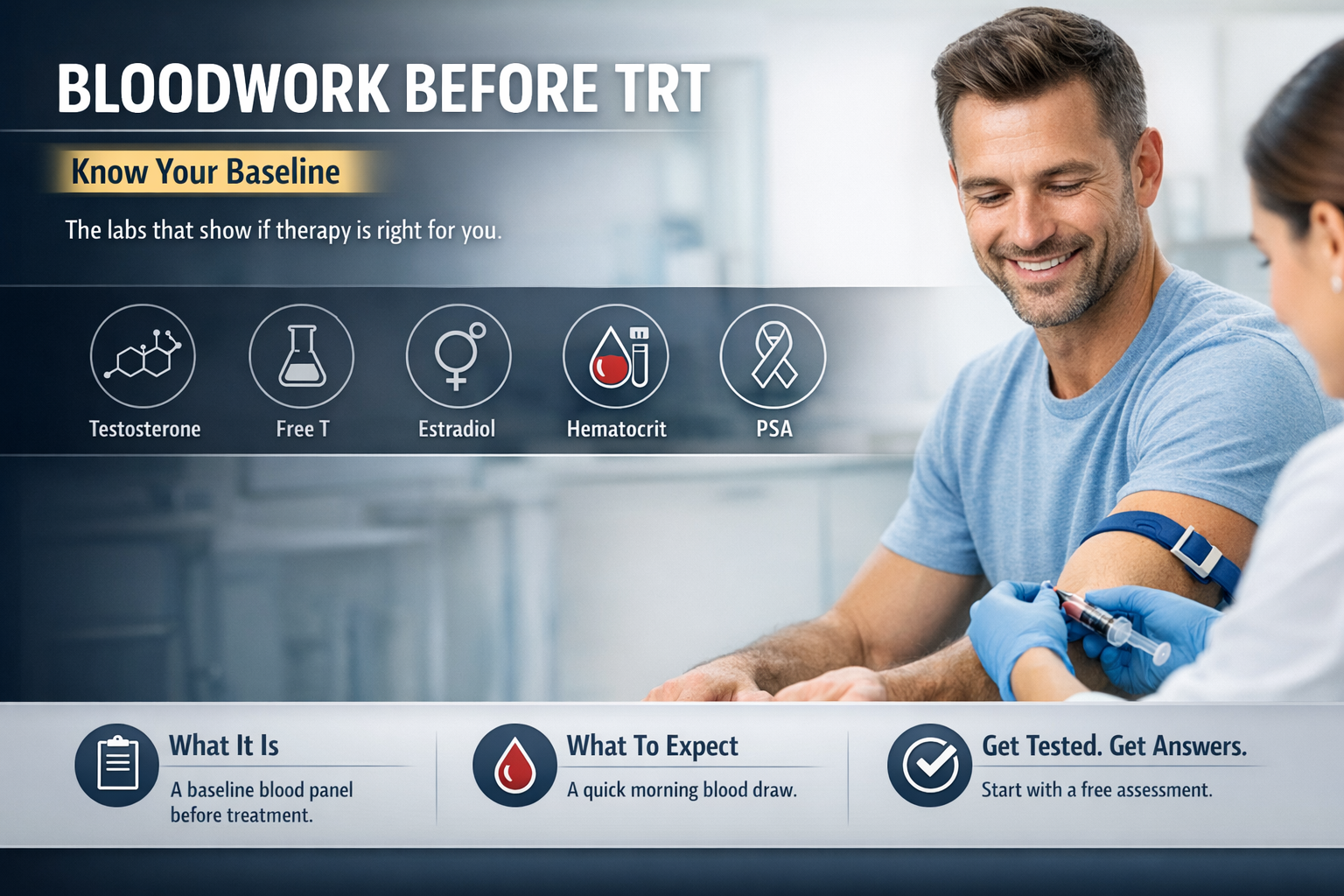
- Total testosterone: the main screening number, drawn in the morning.
- Free testosterone and/or SHBG: free testosterone is the fraction your body can actually use. SHBG (sex hormone-binding globulin) can make total testosterone look normal when free testosterone is low. Learn more about what SHBG is and how it affects testosterone.
- LH and FSH: these pituitary hormones help show whether the problem starts in the testes or the brain's signaling, which affects treatment choices and fertility planning.
- Estradiol (E2): testosterone converts to estrogen, and a baseline helps your provider interpret symptoms later.
- Complete blood count (CBC) with hematocrit: testosterone can raise red blood cell counts, so a starting value is essential.
- PSA: a prostate screening marker that is typically checked at baseline in appropriate age groups.
- Metabolic panel and lipids: blood sugar, liver and kidney function, and cholesterol give a broader picture of your cardiometabolic health.
Many clinics also check thyroid (TSH), vitamin D, and A1C, since thyroid disease and blood sugar problems can mimic low T. If you are unsure how to interpret a printout, our walkthrough on how to read your hormone lab results explains each line.
Why Hematocrit and PSA Are Checked First
Two of the most important safety markers are hematocrit and PSA. Mayo Clinic notes that evaluation of male hypogonadism includes blood tests and a review of symptoms and medical history, and treatment decisions rely on those findings. If your hematocrit is already high, or your PSA is elevated, your provider may investigate further or delay therapy. We cover the red blood cell side in detail in TRT and hematocrit: why blood monitoring matters.
Not sure which labs you need? Let us order them.
Doctor-supervised • Arizona-based • Telehealth available
Get Started — Free Assessment →How to Prepare for Your Blood Draw
Good preparation makes your numbers more reliable. Testosterone tests are typically done in the morning when levels are highest, so schedule early. A few practical tips for Arizona men:
- Book a morning slot: aim for 7 to 10 a.m. Phoenix-area labs are busiest right when they open, so arrive early or book ahead.
- Fast if instructed: lipid and glucose results are more accurate fasted. Drink water, especially in the Arizona heat, because dehydration can skew hematocrit.
- Skip the hard workout beforehand: intense exercise and poor sleep the night before can temporarily change hormone levels.
- Tell your provider about supplements and medications: biotin, opioids, steroids, and some other drugs can affect results.
- Do not test while acutely ill: wait until you have recovered from a cold, flu, or major stressor.
Not sure where to go? Here is a step-by-step guide on how to get your testosterone tested in Arizona, including options for local lab draws.
What Happens After Your Results Come Back
Your provider reviews everything together: symptoms, two morning testosterone results, LH and FSH, and safety markers. There are three common outcomes:
- Confirmed low testosterone with a clear safety picture: you and your provider can discuss whether TRT or an alternative fits your goals, including fertility plans.
- Borderline or mixed results: retesting or looking for an underlying cause (sleep apnea, weight, thyroid, medications) may come first.
- Normal testosterone: your symptoms likely have another cause, and testosterone therapy would not be appropriate.
Starting TRT is never automatic. It is a treatment decision made from your labs, symptoms, and health history.
Ready for real answers about your testosterone?
Doctor-supervised • Arizona-based • Telehealth available
Get Started — Free Assessment →Frequently asked questions
How many blood tests do you need before starting TRT?
Most guidelines call for at least two early-morning total testosterone tests on separate days to confirm low levels, plus a baseline panel that usually includes a CBC with hematocrit, PSA, estradiol, and metabolic and lipid markers.
Do I have to fast for a testosterone blood test?
Fasting is not always required for testosterone itself, but many clinics ask you to fast because lipid and glucose results are more accurate. Follow the instructions on your lab order and schedule the draw in the morning.
Can I get TRT bloodwork done in Arizona without going to my regular doctor?
Yes. Arizona men can complete a telehealth consultation and have labs ordered for a local draw, so you do not need a referral from a primary care office. A licensed provider reviews the results and decides whether treatment is appropriate.
Sources
- Testosterone Therapy in Men With Hypogonadism: An Endocrine Society Clinical Practice Guideline — PubMed (NCBI)
- Testosterone Deficiency Guideline — American Urological Association
- Male Hypogonadism: Diagnosis & Treatment — Mayo Clinic
- Testosterone Test: What It Is, How It's Done & Results — Cleveland Clinic
