
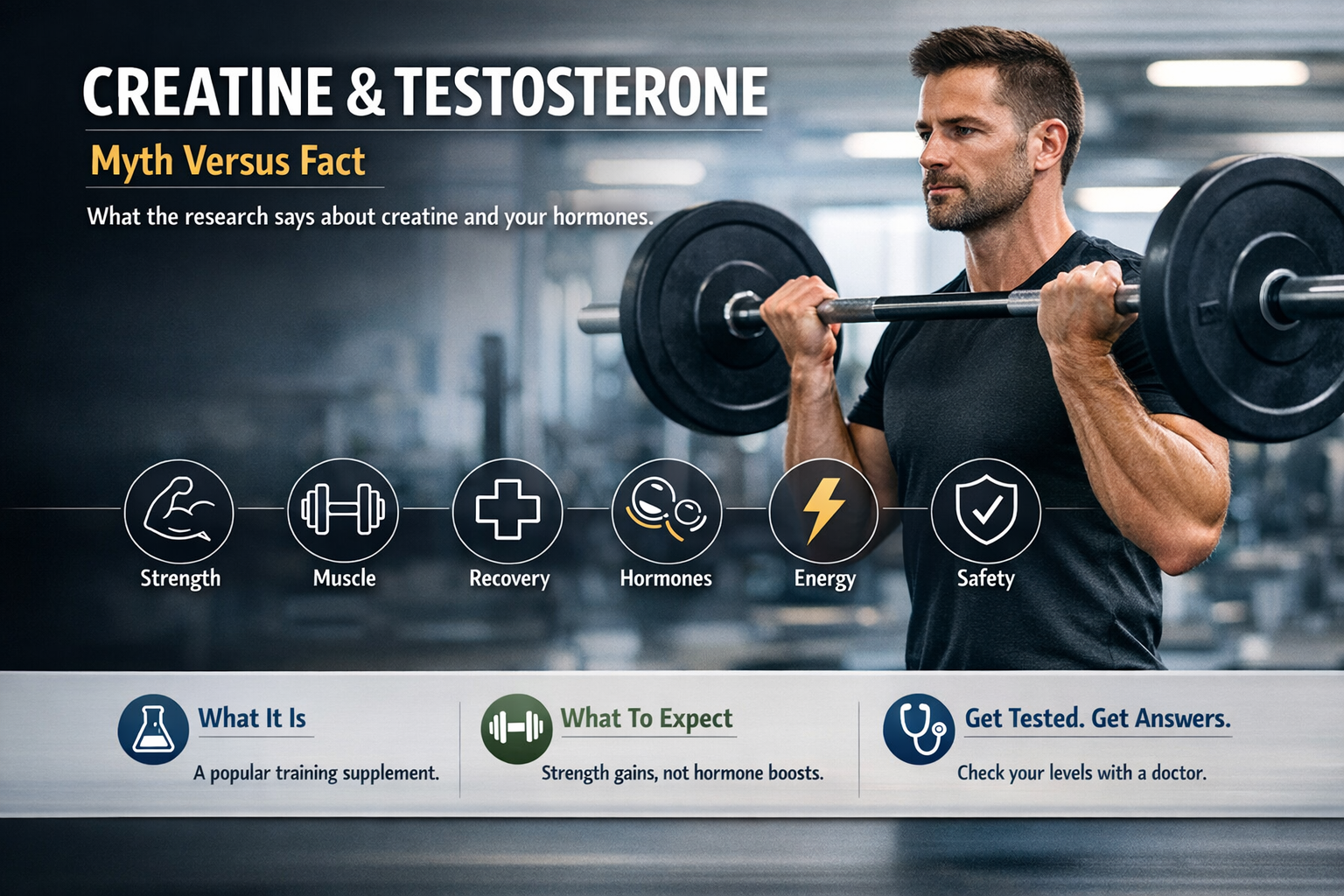
Does Creatine Affect Testosterone? What AZ Lifters Should Know
If you lift in Phoenix, Scottsdale, or anywhere in Arizona, you have probably wondered: does creatine affect testosterone? Between gym forums and supplement ads, the claims run in both directions. Here is what the evidence actually shows, and what to do if you suspect your levels are low.
How creatine works (and why it is not a hormone)
Creatine helps your muscles regenerate ATP, the fast energy used in heavy sets and sprints. The International Society of Sports Nutrition concluded in its position stand on creatine safety and efficacy that it is among the most effective supplements for improving high-intensity exercise capacity and lean mass. Nothing in that mechanism involves your testes or the hormone signaling that makes testosterone.
Does creatine raise testosterone?
Not in any way that matters. In a controlled trial, short-term creatine supplementation did not alter the hormonal response to resistance training, including testosterone. If you feel stronger on creatine, that is training performance, not a hormone boost. For ways that genuinely influence your levels, see our guide on the best workouts to boost testosterone naturally.
The DHT claim: where the hair-loss worry comes from
The myth that creatine hurts testosterone traces to one small study in which three weeks of creatine raised the DHT-to-testosterone ratio in college rugby players. Testosterone itself did not fall. The study did not measure hair loss, and the result has not been firmly replicated. Hair thinning is mostly genetic, as we explain in does TRT cause hair loss.
Think your testosterone might be low?
Doctor-supervised • Arizona-based • Telehealth available
Get Started — Free Assessment →Low energy or weak gains despite creatine? Check your hormones
If you train hard, take creatine, and still feel flat, creatine is not the problem and it will not fix a hormone issue. Persistent fatigue, low libido, poor recovery, and stalled progress can be signs of low testosterone. Read losing muscle despite working out and the signs of low testosterone in men to compare symptoms.
The only way to know is bloodwork. Here is how low testosterone is diagnosed, typically with morning blood draws at a local Arizona lab, and a provider review of your symptoms.
Creatine and TRT: can you use both?
- No known direct interaction. Creatine is commonly used by men on testosterone therapy.
- Different jobs. TRT treats a diagnosed deficiency; creatine supports training performance.
- Stay hydrated. Arizona heat plus heavy training makes fluids important, and your provider can monitor kidney markers with routine labs.
Men weighing supplements against treatment can also read TRT vs. natural testosterone boosters.
Get real answers, not gym-forum guesses
Doctor-supervised • Arizona-based • Telehealth available
Get Started — Free Assessment →Frequently asked questions
Does creatine lower testosterone?
No. Controlled research has not shown that creatine lowers total or free testosterone. One small study in rugby players saw a rise in the DHT-to-testosterone ratio, but testosterone itself did not drop, and the finding has not been consistently replicated.
Can creatine cause hair loss?
The idea comes from that single DHT study. Hair loss from DHT is mainly driven by genetics, and there is no strong evidence that creatine causes it. If you notice thinning, a clinician can help sort out the real cause.
Can I take creatine while on TRT?
Many men on testosterone therapy use creatine for training, and there is no known direct interaction. Tell your provider about every supplement you take so it can be considered alongside your bloodwork and kidney function.
Sources
- International Society of Sports Nutrition position stand: safety and efficacy of creatine supplementation in exercise, sport, and medicine — Journal of the ISSN (PMC)
- Short-term creatine supplementation does not alter the hormonal response to resistance training — PubMed
- Three weeks of creatine monohydrate supplementation affects dihydrotestosterone to testosterone ratio in college-aged rugby players — PubMed
