
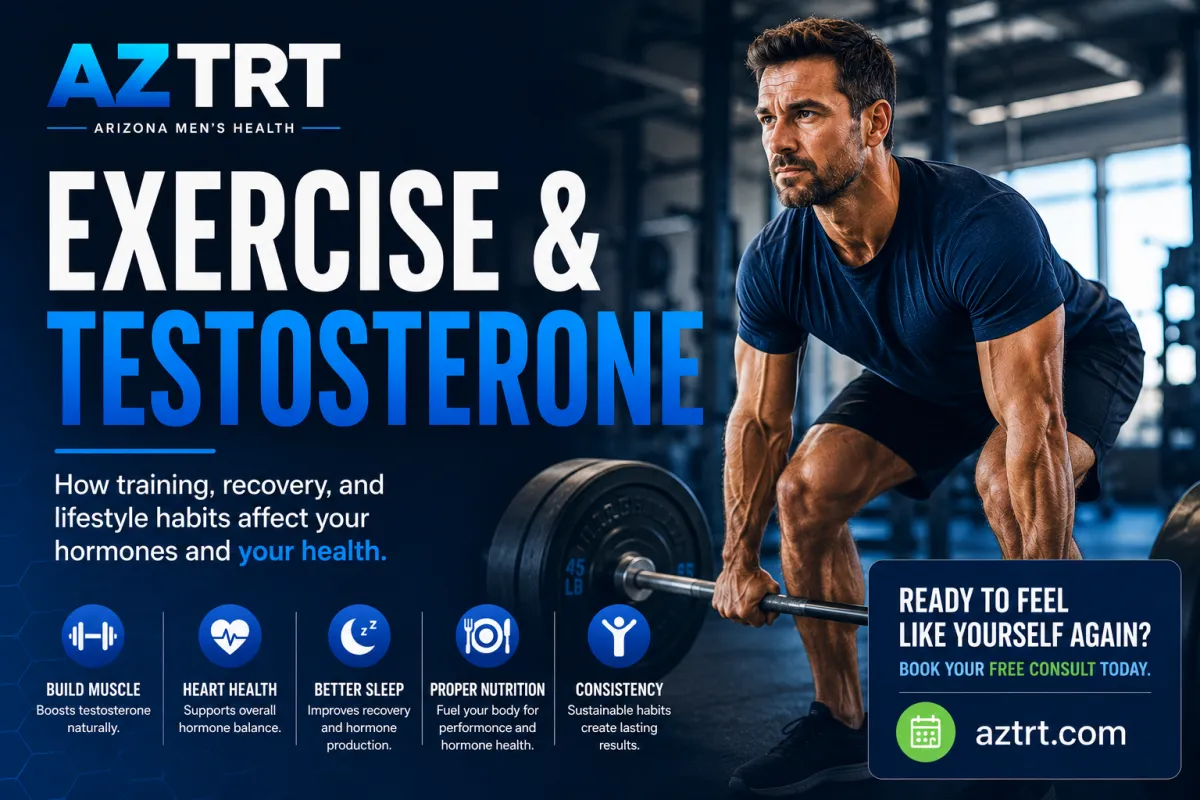
Best Workouts to Boost Testosterone Naturally
Exercise is one of the most well-supported natural levers for supporting healthy testosterone levels — but not all exercise affects hormones the same way.
Resistance training leads the pack
Compound, heavy resistance exercises — squats, deadlifts, presses — tend to produce the biggest acute testosterone response compared to isolation exercises or steady-state cardio alone. Building and maintaining muscle mass over time is also associated with healthier hormone profiles.
Cardio has its place, but moderation matters
Moderate cardio supports cardiovascular and metabolic health, both of which indirectly support hormone balance. However, chronic, excessive endurance training without adequate recovery has been linked in some studies to lower testosterone, likely tied to elevated cortisol and inadequate recovery.
Recovery is not optional
Overtraining without enough rest, sleep, or nutrition can work against you. Testosterone and cortisol have an inverse relationship in some contexts — chronic stress on the body can suppress the former while elevating the latter.
A simple framework
- Prioritize resistance training 3–4x per week
- Include some moderate cardio for heart health
- Build in real rest days
- Fuel your training with adequate protein and calories
- Don't chase exhaustion as a badge of honor
Exercise alone won't fix clinically low testosterone, but it's a foundational habit that supports whatever treatment plan — if any — is right for you.
Curious where you stand? You can book a free, no-obligation consult with an Arizona-licensed provider any time — it takes about 60 seconds to get started, and our FAQ covers most of what people ask before their first visit.
If this was useful, you may also want to read our post on The Link Between Sleep and Testosterone Levels, or browse the full AZTRT blog for more Arizona men's health guides.
