
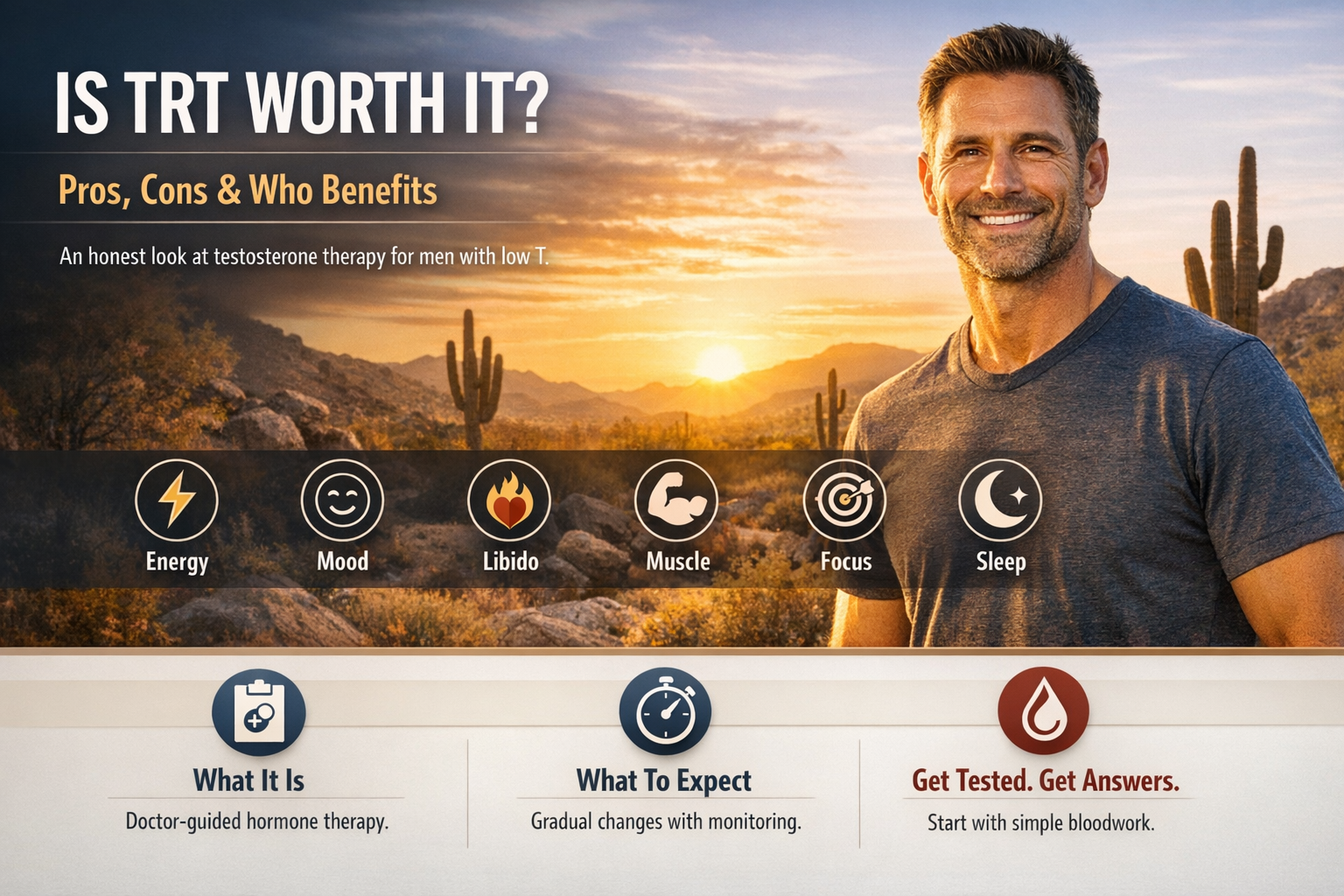
Is TRT Worth It? Pros, Cons & Who Actually Benefits
If you are asking "is TRT worth it?", you are probably tired, foggy, or just not feeling like yourself, and you are wondering whether testosterone replacement therapy (TRT) is real help or hype. The honest answer depends on your labs, your symptoms, and your goals. This guide walks through the real pros and cons so Arizona men can decide with clear eyes.
Who TRT is actually designed for
TRT is a medical treatment for testosterone deficiency (also called hypogonadism). It is not meant for every man who feels run down. The American Urological Association guideline on testosterone deficiency says the diagnosis should rest on symptoms plus low testosterone confirmed on more than one early-morning blood test.
That is why the first step is always testing. If you are not sure where your numbers fall, start with what testosterone level is considered low and then see how low testosterone is diagnosed. A man with a normal level and vague fatigue is often better served by looking at sleep, weight, stress, or thyroid first.
The potential pros of TRT
When TRT is prescribed for a confirmed deficiency, men commonly report improvements in several areas. Results vary from person to person, and nothing is guaranteed.
- Energy and fatigue: Many men notice better daytime energy once their levels are back in a healthy range.
- Sexual function and libido: Low desire and reduced erections are among the most common reasons men seek care, and these symptoms are the ones most closely tied to low testosterone.
- Mood and focus: Some men describe less irritability and a clearer head, although mood changes have many causes.
- Body composition: TRT can support lean muscle and reduce body fat when combined with training and nutrition. It does not replace the gym.
- Bone health: Testosterone plays a role in maintaining bone density over time.
Timing matters too. Most men do not feel different overnight, so see our realistic guide on how long TRT takes to work before judging whether it is worth it.
Not sure if TRT is worth it for you? Find out with real numbers.
Doctor-supervised • Arizona-based • Telehealth available
Get Started — Free Assessment →The cons and risks to weigh
A fair answer has to include the downsides. TRT is a prescription therapy with real tradeoffs.
- It is often long-term. Your body may reduce its own production while you are on treatment, so stopping is a decision to plan with your provider.
- Fertility can be affected. TRT can lower sperm production. Men who want children soon should talk about alternatives first.
- Ongoing monitoring is required. Treatment can raise red blood cell count, so regular labs matter. See why hematocrit monitoring matters.
- Side effects are possible. These can include acne, fluid retention, and changes in estrogen balance, and they are usually manageable with dose adjustments.
- Cost and commitment. Medication, labs, and follow-ups add up. Our Arizona TRT pricing guide breaks down what to expect.
What the heart-safety research says
Cardiovascular safety is the question most men ask. The large TRAVERSE trial followed thousands of middle-aged and older men with low testosterone and found that testosterone therapy did not increase major adverse cardiac events compared with placebo. The trial did note some other findings, such as a higher rate of certain events like atrial fibrillation, which is one reason medical supervision matters.
The AUA guideline, summarized in a peer-reviewed publication on PubMed, also emphasizes that men on treatment should be monitored, including blood counts and prostate screening where appropriate.
So, who benefits most?
TRT tends to be worth it for men who:
- Have clear symptoms such as low energy, low libido, poor recovery, or low mood
- Have repeatedly low morning testosterone on lab work
- Have addressed the basics like sleep, weight, alcohol, and stress, or are working on them alongside treatment
- Are comfortable with regular follow-up labs and check-ins
It is usually not worth it for men with normal testosterone, men looking for a quick performance boost, or men who are not willing to commit to monitoring.
Is TRT worth it in Arizona specifically?
Arizona men have an advantage here: you can get tested at local labs across the Phoenix area, and telehealth makes follow-ups simple, even if you live in Scottsdale, Mesa, Tempe, Gilbert, or Tucson. For busy professionals and active men who live in the heat, convenience and consistent monitoring make the experience much easier to stick with.
Ready to see if testosterone therapy fits your goals?
Doctor-supervised • Arizona-based • Telehealth available
Get Started — Free Assessment →Frequently asked questions
Is TRT worth it if my testosterone is normal?
Generally no. TRT is intended for men with confirmed low testosterone and symptoms. If your levels are normal, a provider will usually look for other causes of your symptoms first.
What are the biggest downsides of TRT?
The main tradeoffs are the long-term commitment, possible effects on fertility, the need for regular blood work, and side effects such as acne or higher red blood cell counts that need monitoring.
How do I know if TRT is working for me?
Your provider will track both symptoms and lab results. Many men notice changes over weeks to a few months, and your plan is adjusted based on how you feel and what your bloodwork shows.
Sources
- Evaluation and Management of Testosterone Deficiency (2024) — American Urological Association
- Cleveland Clinic-led trial finds testosterone replacement therapy does not increase incidence of major adverse cardiac events — Cleveland Clinic
- Evaluation and Management of Testosterone Deficiency: AUA Guideline — PubMed
