
How to Know If TRT Is Working: Signs, Labs & Timeline
If you've started testosterone replacement therapy, the first question is usually the same: how do I know if TRT is working? The honest answer is that it takes both how you feel and what your bloodwork shows. For Arizona men on therapy, here is what to look for, when to expect it, and when to call your provider.
Why "feeling it" and "labs" both matter
Symptoms are the reason most men start TRT, but they are subjective and can be influenced by sleep, stress, and expectations. Labs are objective but don't tell the whole story on their own. The Endocrine Society's clinical practice guideline on testosterone therapy in men with hypogonadism recommends evaluating men on treatment for both symptom response and lab values, which is exactly how a good clinic should manage you.
Signs TRT is working (and roughly when)
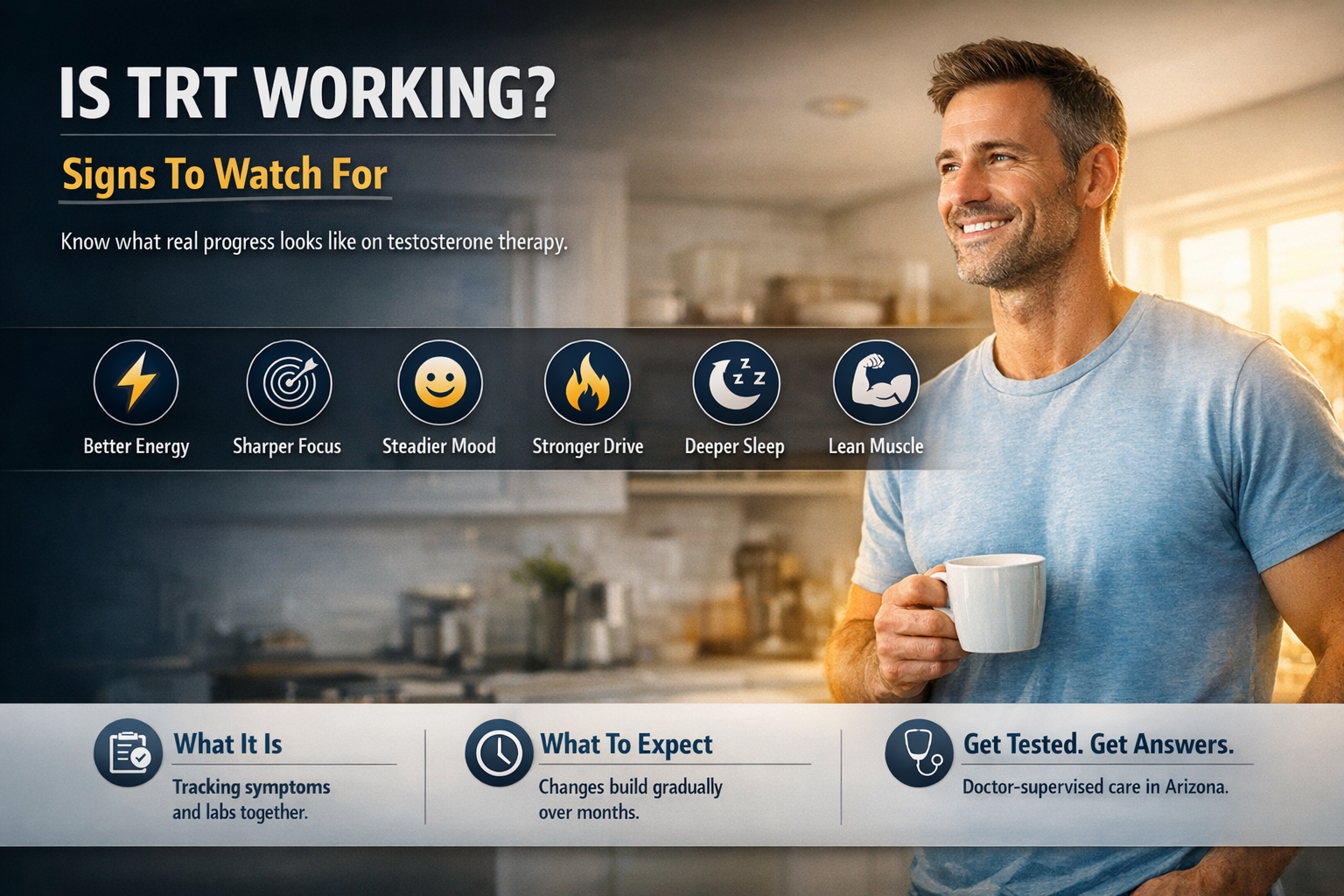
Everyone responds a little differently, but this is a typical sequence. For a deeper breakdown, see our guide on how long TRT takes to work.
- Weeks 1 to 4: sleep, energy and mood. Many men notice steadier energy, better motivation, and a lift in mood first. Some notice better sleep quality.
- Weeks 3 to 8: libido and sexual function. Interest in sex and morning erections often improve early, though erectile quality can take longer and may need other factors addressed.
- Months 2 to 4: workouts and recovery. Strength, stamina, and recovery between sessions tend to improve.
- Months 3 to 6 and beyond: body composition. Gradual changes in lean muscle and body fat show up slowly, and only with consistent training and nutrition.
Reviews of the evidence note that monitoring recommendations for men on testosterone therapy are built around checking response at roughly 3 to 6 months, then at regular intervals after that, because the full effect on muscle, bone, and body fat takes much longer than the effect on mood or libido.
The labs that confirm it
Your provider will typically track several markers. See our overview of which bloodwork gets monitored on TRT and how often for the full list.
- Total (and often free) testosterone: confirms your dose is bringing levels into a healthy target range.
- Hematocrit and hemoglobin: TRT can raise red blood cell counts, so this is a core safety check.
- PSA: monitored as part of prostate safety, depending on your age and risk.
- Estradiol (E2): checked when symptoms such as water retention or mood changes suggest it's out of balance.
Timing matters. A level drawn right after an injection looks very different from one drawn at the end of your cycle, which is why we explain when to get your blood drawn on TRT (peak vs. trough). The American Urological Association's testosterone deficiency guideline likewise stresses that treatment should be reassessed with symptoms and labs, and adjusted if goals aren't being met.
Not sure your therapy is on track?
Doctor-supervised • Arizona-based • Telehealth available
Get Started — Free Assessment →What if you don't feel any different?
Not feeling a change is common in the first weeks and doesn't automatically mean TRT has failed. Before changing anything, a provider will usually check a few things:
- Dose and timing: your injection schedule may produce big peaks and valleys that explain uneven symptoms.
- Consistency: skipped or late doses make results hard to judge.
- Estrogen or hematocrit: imbalances can blunt benefits or cause side effects.
- Other causes: poor sleep, sleep apnea, thyroid issues, depression, alcohol, and stress can all mimic low T.
If you actually feel worse early on, read why some men feel worse after starting TRT and how it's fixed. And if results were good and then faded, our post on whether TRT stops working over time explains the usual culprits.
Keep a simple progress log
Because memory is unreliable, many men find it helpful to track a few things weekly: energy (1 to 10), mood, libido, sleep quality, workout performance, and body weight or waist measurement. Bring that log to each follow-up. It gives your provider far better information than "I think I feel okay."
Getting monitored in Arizona
With telehealth, follow-up visits and local lab draws across Phoenix, Scottsdale, Mesa, Tempe, Chandler, Gilbert and Tucson are straightforward. The key is a clinic that schedules your reassessment, reviews your labs with you, and adjusts the plan instead of leaving you to guess.
Ready for clear answers about your levels?
Doctor-supervised • Arizona-based • Telehealth available
Get Started — Free Assessment →Frequently asked questions
How long does it take to know if TRT is working?
Some men notice mood, energy, and libido changes within a few weeks, but a fair assessment of TRT usually happens around 3 to 6 months, when labs are rechecked and slower changes like muscle and body fat become visible.
Can my testosterone level be normal but I still feel bad on TRT?
Yes. Symptoms depend on more than one number. Dose timing, estradiol, hematocrit, sleep, stress, and other medical conditions can all affect how you feel, so your provider should look at the whole picture rather than just total testosterone.
What are the first signs testosterone therapy is working?
The earliest changes are often steadier energy, better mood and motivation, and improved libido. Changes in strength and body composition generally take several months and depend on training and nutrition.
Sources
