
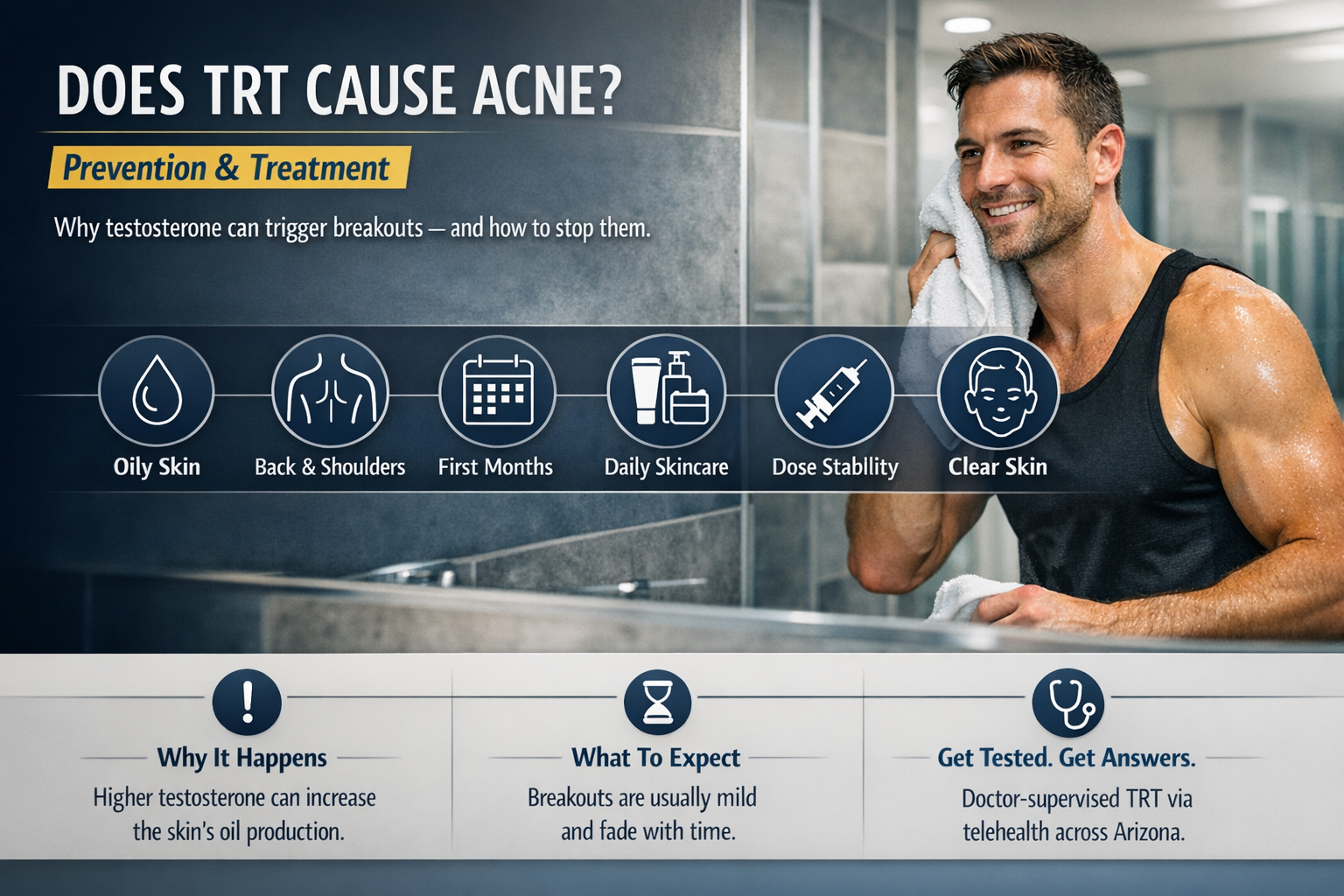
Does TRT Cause Acne? Causes, Prevention & Treatment Tips
Does TRT cause acne? It's one of the most common questions men ask before starting testosterone replacement therapy — often right after asking about hair loss. The short answer: acne is a real, well-documented side effect of TRT, but it affects a minority of men, tends to show up early, and is usually mild and treatable. Here's what Arizona men should know about why TRT breakouts happen, who's most likely to get them, and how to keep your skin clear while your hormones get back on track.
Why TRT can cause acne
The mechanism is the same one that gave many of us acne as teenagers. Your skin contains sebaceous glands that produce sebum — the natural oil that keeps skin from drying out. These glands are highly sensitive to androgens (male hormones). When testosterone levels rise, androgens stimulate sebaceous gland growth and sebum production, and they also increase keratin buildup inside pores. More oil plus more dead skin cells means more clogged pores — and clogged pores are where acne-causing bacteria thrive.
Testosterone also converts to dihydrotestosterone (DHT), an even more potent androgen at the skin level. DHT is the same hormone behind androgenic hair concerns — if you've read about whether TRT causes hair loss, this is the same pathway acting on a different tissue. Sebaceous glands in the face, chest, shoulders, and upper back carry the most androgen receptors, which is exactly where TRT-related breakouts tend to appear.
How common is acne on TRT?
Less common than most men fear. A recent scoping review of dermatological side effects of TRT found acne was the most frequent skin-related adverse event reported in studies — but it still affected only a small minority of participants, roughly in the single-digit percentage range across most trials. In other words: it's the most common skin side effect of testosterone therapy, and most men still never get it.
The Mayo Clinic lists acne and skin reactions among the recognized risks of testosterone therapy, alongside things like elevated red blood cell counts — which is why legitimate TRT always includes ongoing monitoring. If you want the full picture of what responsible treatment watches for, see our guide to TRT risks and side effects and how they're managed.
Who's most likely to break out on TRT?
- Men with a history of teenage or adult acne. If your skin was acne-prone at 16, it's more likely to react when androgen levels rise again. Genetics load the gun.
- Men whose levels swing widely. Injection protocols with long gaps between doses create bigger peaks and troughs in testosterone. Research suggests those androgen spikes are harder on sebaceous glands than steady levels.
- Men on higher doses. More androgen exposure generally means more sebum. Doses pushed above the physiologic range — common at less careful clinics — raise the odds.
- The first 3–6 months of therapy. Skin tends to react early, while your body adjusts to new hormone levels, then settle down. This mirrors the broader adjustment curve we describe in how long TRT takes to work.
Worried About TRT Side Effects? Get Expert Guidance
Arizona-licensed providers • Arizona-based • Telehealth available
Get Started — Free Assessment →Where TRT acne shows up — and the Arizona factor
TRT-related breakouts most often appear on the upper back, shoulders, chest, and face — the zones densest in androgen-sensitive oil glands. "Bacne" after starting therapy is the classic presentation.
Living in Phoenix, Scottsdale, Mesa, or Tucson adds a practical wrinkle: heat and sweat. Arizona summers mean more sweating, more sunscreen, and more time in gym clothes — all of which can trap oil against the skin. Sweat itself doesn't cause acne, but sitting in a soaked shirt after a 105-degree afternoon workout gives clogged pores a head start. Quick showers after sweating and breathable fabrics matter more here than in most states.
How to prevent and treat acne on TRT
Most TRT acne responds well to basic, consistent measures:
- Keep your dose steady and physiologic. The goal of good TRT is mid-normal levels, not maximum levels. Smaller, more frequent injections smooth out the hormonal peaks that aggravate skin. This is also where delivery method matters — daily gels and creams produce steadier levels than infrequent injections, a trade-off we break down in our comparison of TRT injections, gels, pellets, and creams.
- Wash smart, not hard. A gentle cleanser twice daily and after sweating. Scrubbing aggressively irritates skin and can make breakouts worse.
- Use proven over-the-counter actives. Benzoyl peroxide washes (especially for chest and back) and salicylic acid cleansers are first-line, inexpensive, and effective for mild breakouts.
- Shower after sweating, wear breathable fabrics, and change out of damp gym clothes promptly — doubly important through an Arizona summer.
- Don't pick. Picking and squeezing turns two-week pimples into two-month marks.
- Escalate if needed. Persistent or cystic acne warrants prescription topicals (like tretinoin), a short antibiotic course, or a dermatology referral — plus a hard look at your dose and injection frequency.
When to talk to your TRT provider
Tell your provider if acne is more than an occasional blemish — especially if it's painful, cystic, or affecting your confidence. A good clinic treats skin changes as data: they may adjust your dose, split injections into smaller more frequent ones, switch your delivery method, or check labs to make sure your levels aren't running above range. This is the advantage of physician-supervised care over "set it and forget it" hormone programs. Because AZTRT operates by telehealth across Arizona, a dose adjustment is a quick virtual visit — no waiting room required, whether you're in Gilbert, Chandler, Tempe, or Flagstaff.
One more reason not to self-treat with online testosterone from unsupervised sources: acne that appears suddenly and severely can be a sign of excessive androgen exposure. Monitoring exists to catch exactly that.
Clear Answers, Steady Dosing, Real Medical Supervision
Arizona-licensed providers • Arizona-based • Telehealth available
Get Started — Free Assessment →Frequently asked questions
How long does TRT acne last?
For most men, TRT-related acne appears in the first 3–6 months of therapy and improves as the body adapts to stable hormone levels. With consistent skincare and a well-managed dose, breakouts typically fade rather than becoming a permanent problem. Persistent acne beyond six months is a signal to review your dose and protocol with your provider.
Can I get rid of acne without stopping TRT?
Usually, yes. Most TRT acne is managed while staying on therapy: gentle cleansing, benzoyl peroxide or salicylic acid products, showering after sweating, and dose or frequency adjustments from your provider. Stopping TRT is rarely necessary for skin reasons — severe cases are typically handled with prescription topicals or a dermatology referral.
Does a higher testosterone dose cause more acne?
Generally, yes — sebaceous glands respond to androgen exposure, so higher doses and bigger hormone spikes increase the likelihood of oily skin and breakouts. This is one reason doctor-supervised TRT targets mid-normal physiologic levels with steady dosing instead of pushing levels as high as possible.
Sources
