
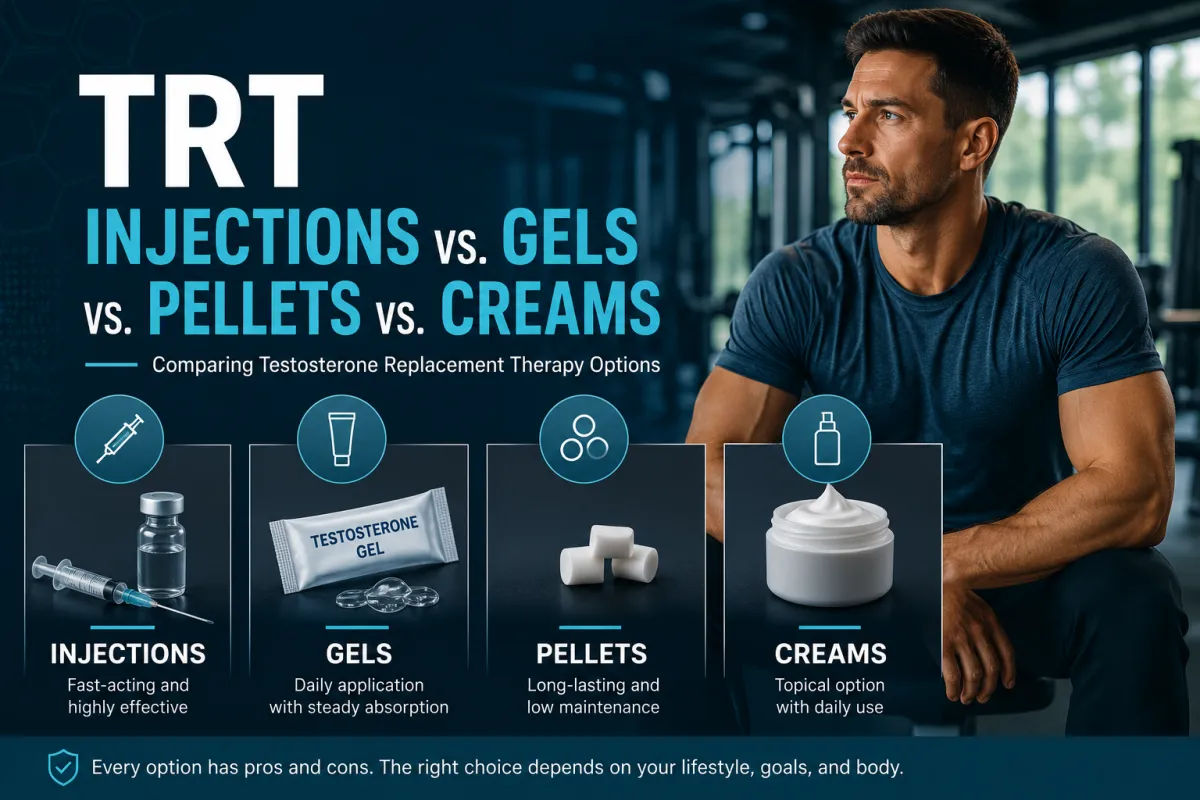
TRT Injections vs. Gels vs. Pellets vs. Creams
Once you and your provider decide TRT is right for you, the next question is how you'll take it. Each method delivers testosterone differently, with trade-offs in convenience, cost, and how steady your levels stay. Here's a clear comparison.
Injectable testosterone
How it works: Testosterone is injected, typically once or twice weekly (or more frequent smaller doses). Pros: Most common, cost-effective, reliable, and easy to adjust. Many men self-inject at home in seconds. Cons: Requires comfort with needles; levels can fluctuate if dosed infrequently.
Gels and creams
How it works: Applied to the skin daily. Pros: Needle-free, steady daily levels. Cons: Must be applied every day; risk of transferring testosterone to partners or children through skin contact; absorption varies between men.
Pellets
How it works: Small pellets are inserted under the skin during a quick in-office procedure and release testosterone over several months. Pros: Very low maintenance — nothing to do day to day. Cons: Higher upfront cost, a minor procedure, and the dose can't be easily changed once placed.
Find out which TRT method fits you
Doctor-supervised • Arizona-based • Telehealth available
Get Started — Free Assessment →Which method is best?
There's no single "best" method — only the best fit for you. Injections are the most popular for good reason: they're affordable, flexible, and effective. But if you dislike needles or want zero daily effort, gels or pellets may suit you better. Your provider will weigh your preferences, labs, and goals to recommend the right option, and you can often switch if your first choice isn't ideal.
Find out if you're a candidate for TRT
Doctor-supervised • Arizona-based • Telehealth available
Get Started — Free Assessment →Frequently asked questions
Are TRT injections better than gels?
Injections are more cost-effective and easy to adjust, while gels are needle-free but require daily use and skin-transfer precautions. The best option depends on your preferences and provider's advice.
Do TRT injections hurt?
Most men find self-injections quick and nearly painless once they're shown the technique, especially with small needles used for subcutaneous dosing.
Can I switch TRT methods later?
Often yes. If your first method isn't a good fit, your provider can usually transition you to another based on your labs and how you feel.
