
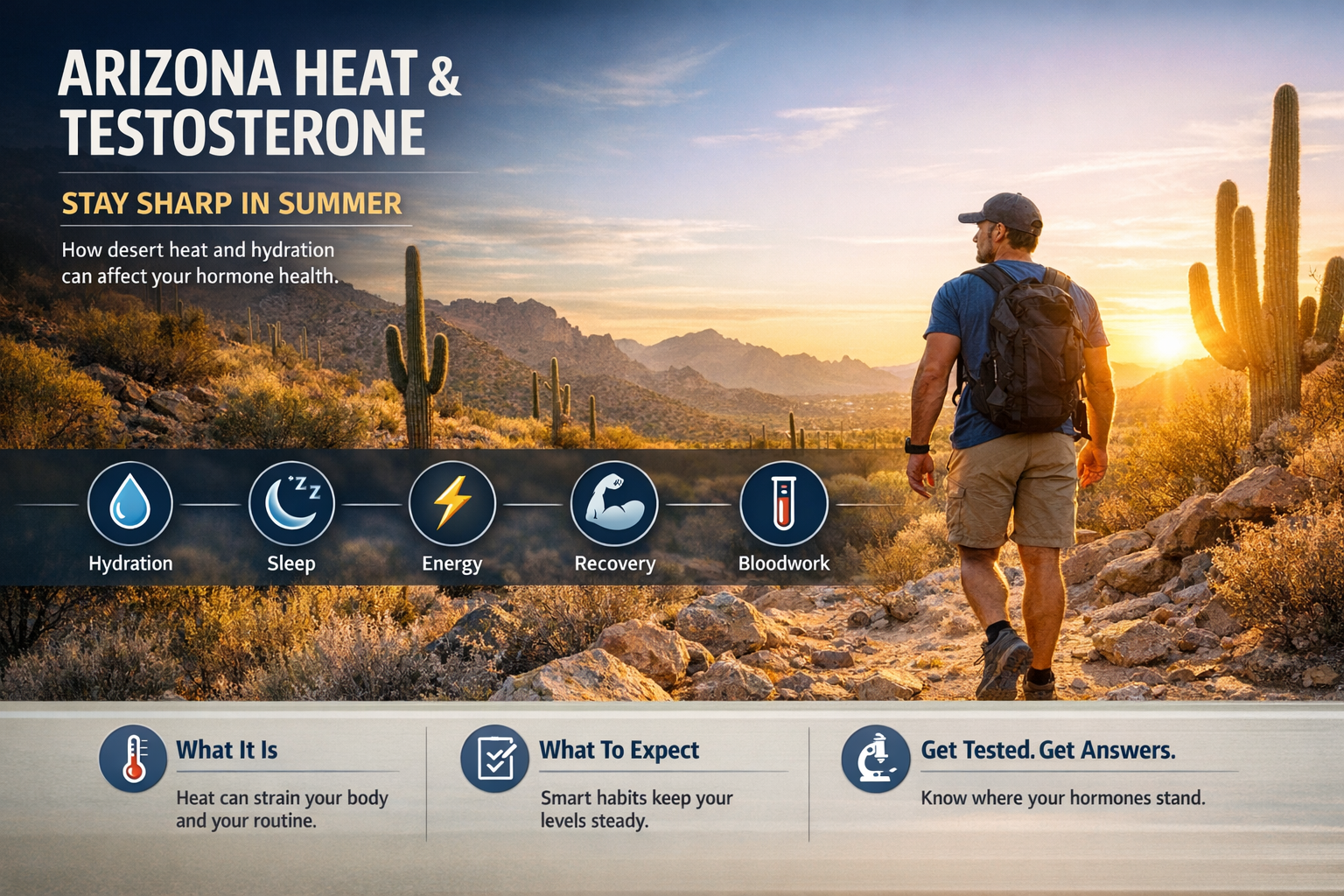
Does Arizona Heat Lower Testosterone? Summer Tips for Men
If you live in Phoenix, Scottsdale, Mesa or Tucson, you have probably wondered: does Arizona heat lower testosterone? Every July, men tell us they feel flat, sleep badly and drag through workouts. Is it the hormones, or just the 115-degree days? The honest answer is a bit of both, and it is worth understanding before you assume something is wrong.
Does heat directly lower testosterone in men?
Most of the heat-and-testosterone data comes from animal studies, which do not translate cleanly to men living in air-conditioned homes. In people, researchers have looked at whether testosterone shifts across the calendar, and seasonal variation in serum testosterone has been studied in large institutional databases. Any seasonal swing seen in that kind of data is small compared with the effect of weight, sleep, alcohol, medications and age.
The practical takeaway: a single low reading in August does not prove the heat is to blame, and a normal reading in January does not mean summer is harmless. If symptoms persist, the answer is proper testing, not guessing.
How Arizona summers can indirectly hurt your hormone health
Poor sleep
Hot nights, late sunsets and AC cycling all chop up sleep. Sleep and testosterone are tightly linked, and we cover that in detail in our guide to the link between sleep and testosterone levels. A few rough weeks of sleep can leave you feeling like you have low T even when your labs are fine.
Dehydration and fatigue
Fluid status changes the makeup of your blood: plasma volume shifts with the body's hydration level. Even mild dehydration can cause fatigue, headaches, brain fog and low motivation, all of which overlap with classic low testosterone symptoms.
Skipped workouts and stress
When it is too hot to train outdoors, many men quietly stop lifting or walking. Less training, more stress and more drinking by the pool is a combination that tends to lower energy and drive regardless of season.
What heat means if you are on TRT
Testosterone therapy can raise red blood cell count. The FDA prescribing information for testosterone products warns about increases in hematocrit and polycythemia, which is why monitoring is a standard part of care. When you are dehydrated, your blood is more concentrated, so a lab drawn after a hot, dry week can look worse than your true baseline.
That is one reason we stress consistency in how and when labs are drawn. Read more in why hematocrit monitoring matters on TRT and our breakdown of what gets monitored on TRT and how often.
Don't forget your medication storage
Summer in Arizona is also hard on supplies left in cars or on porches. See our guide on whether testosterone goes bad in heat for safe storage tips.
Tired all summer? Find out if it's low T.
Doctor-supervised • Arizona-based • Telehealth available
Get Started — Free Assessment →Summer habits that protect your energy and hormones
- Hydrate on a schedule. Drink steadily through the day and add electrolytes if you sweat heavily.
- Train early or indoors. Lift in the morning or at a gym so heat never becomes the excuse to skip.
- Protect sleep. Keep the bedroom cool and dark, and limit alcohol close to bedtime.
- Time your labs. Get bloodwork when you are well hydrated, and follow your provider's instructions on timing.
- Eat enough. Heat can suppress appetite, but under-eating can drag down energy and recovery.
When to get tested instead of waiting out the summer
If low energy, low libido, mood changes or lost muscle last well beyond a few hot weeks, it is time for answers. Our walkthrough on how to get your testosterone tested in Arizona explains the process, and telehealth makes it easy to start from home.
Get real answers about your testosterone.
Doctor-supervised • Arizona-based • Telehealth available
Get Started — Free Assessment →Frequently asked questions
Does hot weather lower testosterone?
Evidence in men is limited, and any seasonal change appears modest. Heat more often affects testosterone indirectly through poor sleep, dehydration, less exercise and more stress.
Can dehydration affect my TRT blood work?
Yes. Dehydration concentrates the blood, which can make red blood cell measurements such as hematocrit look higher. Staying hydrated before labs helps your provider see a truer picture.
Is it safe to take TRT in the Arizona summer?
For most men under medical supervision, yes. The key is consistent dosing, good hydration, safe storage of medication, and regular monitoring with a licensed provider.
Sources
