
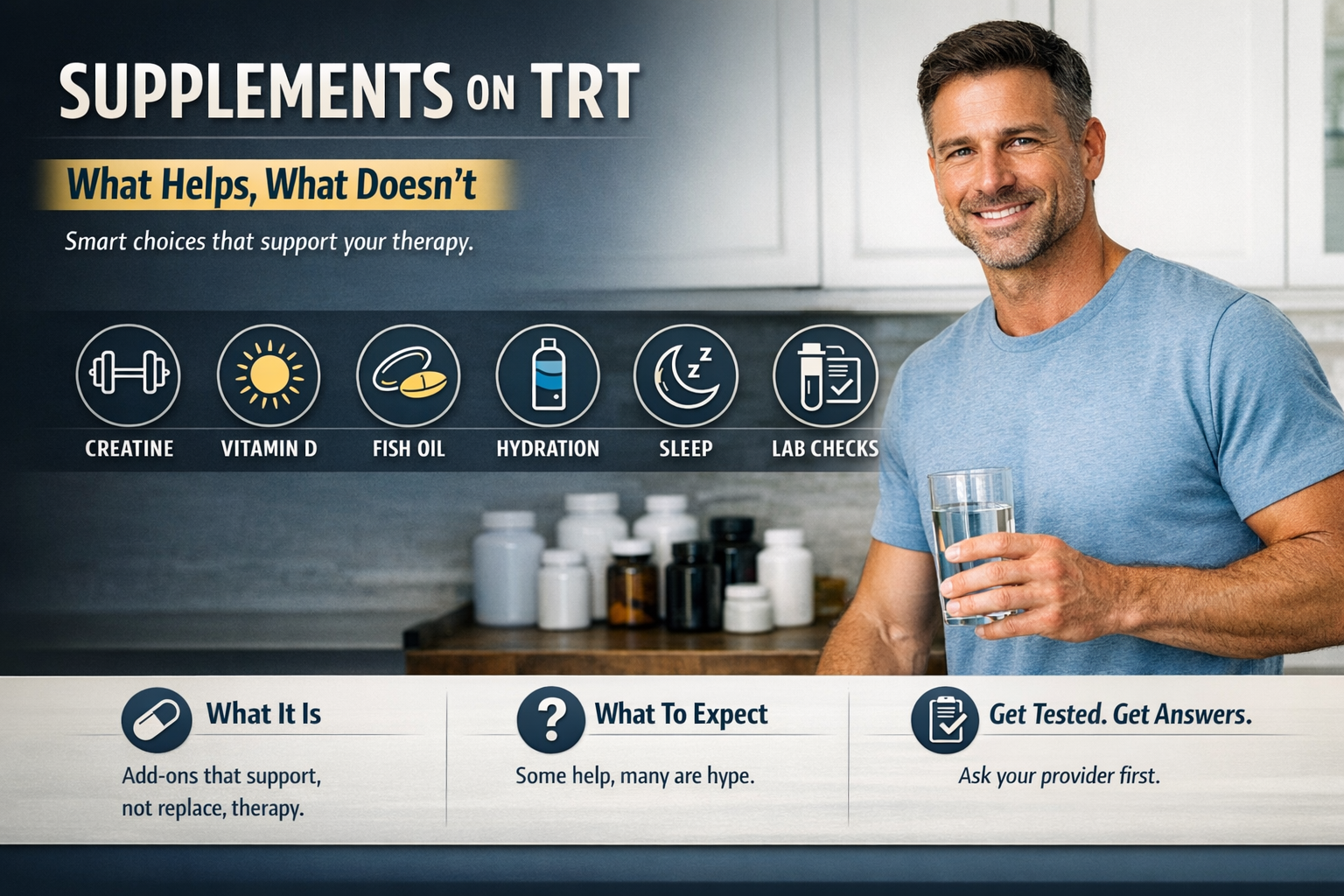
Best Supplements to Take on TRT? What Helps and What Doesn't
If you are starting testosterone replacement therapy in Arizona, one of the first questions is usually, "What are the best supplements to take on TRT?" The honest answer is that supplements are a supporting cast, not the main act. Therapy is what restores your testosterone; supplements may help fill specific gaps, and a few can quietly work against you.
This guide covers which popular supplements have real evidence, which are mostly marketing, and why a Phoenix-area provider will want to know everything you take before your next lab draw.
Do you need supplements on TRT at all?
Most men do not need a shelf full of pills. Doctor-supervised TRT is built around your lab results, a prescription, and follow-up monitoring. Clinical guidelines such as the American Urological Association testosterone deficiency guideline focus on accurate diagnosis, individualized treatment and regular monitoring, not on stacking add-ons.
Supplements make sense when a lab or lifestyle gap points to a specific need. If you are curious about how therapy compares with over-the-counter options in the first place, our breakdown of TRT versus natural testosterone boosters explains why medical treatment and supplements are not interchangeable.
Supplements with reasonable evidence
Vitamin D (if you are low)
Many Arizona men assume sunshine covers vitamin D, but indoor work, sunscreen and summer heat-avoidance mean deficiency still happens. A randomized controlled trial of vitamin D in healthy men examined whether supplementation changes testosterone, and the broader picture is that vitamin D is worth correcting when deficient but is not a testosterone booster. Ask for a 25-hydroxy vitamin D level and supplement only if it is low. For more detail, see our post on whether vitamin D boosts testosterone.
Creatine monohydrate
Creatine is one of the most studied sports supplements, and men on TRT who lift often ask about it. The Mayo Clinic's creatine overview notes it is commonly used to support short, high-intensity exercise and is generally well tolerated in healthy adults at standard doses, though people with kidney disease should talk to a doctor first. Creatine can raise serum creatinine on bloodwork without meaning your kidneys are harmed, so tell your provider you take it. Our guide on how TRT relates to liver and kidney health explains which markers get watched.
Omega-3 fish oil
Fish oil is a popular general-health choice for triglycerides and heart health. It is not a testosterone treatment, but it is usually low-risk and reasonable if your diet is light on fatty fish. Higher doses can interact with blood thinners, so mention it at your consult.
Magnesium, zinc and a basic multivitamin
These matter mainly if your diet is poor or a lab shows a shortage. Taking large doses "just in case" does not raise testosterone in men who are already replete and can cause side effects or mineral imbalances.
Not sure what your body actually needs?
Doctor-supervised • Arizona-based • Telehealth available
Get Started — Free Assessment →Supplements to avoid or question on TRT
"Testosterone booster" blends
Over-the-counter test boosters rarely have strong human evidence, and they are not regulated like prescription medication. If you are already on therapy, your body is receiving testosterone directly, so there is little reason to pay for a proprietary blend of herbs.
Anything that could raise your red blood cell count
Testosterone therapy can increase hematocrit in some men, and published literature on testosterone-related erythrocytosis describes why this needs monitoring. Iron supplements you do not need, or products containing hidden stimulants and androgens, can complicate that picture. Read more about why hematocrit monitoring matters on TRT.
Prohormones, DHEA and hidden-hormone products
Products that add hormones on top of therapy can throw off your estradiol, suppress your own production further and make lab results hard to interpret. If a label promises "natural testosterone," treat it with suspicion.
Lifestyle habits that outperform any pill
- Sleep: Consistent, sufficient sleep supports energy, mood and recovery.
- Hydration: Arizona heat makes this especially important for men on therapy, since dehydration can concentrate your blood and muddy lab values.
- Resistance training and protein: These do far more for muscle than any supplement.
- Limited alcohol: Heavy drinking undercuts the progress you are paying for.
How to bring supplements up with your provider
Write down every product, dose and brand, including protein powders and pre-workouts, and share it before your baseline labs. Your provider can then time changes sensibly, so you are not adding three things at once and wondering what caused a shift in your numbers. Our guide on what gets monitored and how often on TRT shows how labs and supplements fit together.
Ready for a plan built around your labs?
Doctor-supervised • Arizona-based • Telehealth available
Get Started — Free Assessment →Frequently asked questions
What supplements should I take with TRT?
There is no required stack. Common, reasonable options include vitamin D when levels are low, creatine for lifters, and fish oil when diet is lacking. Your provider should review any addition against your labs.
Is creatine safe while on testosterone therapy?
Creatine is generally well tolerated in healthy adults, but it can raise creatinine on bloodwork. Tell your provider you take it, and check with a doctor first if you have kidney concerns.
Do I still need testosterone boosters if I'm on TRT?
No. Therapy supplies testosterone directly, and over-the-counter boosters add cost and uncertainty without strong evidence, so most clinicians advise skipping them.
Sources
