
TRAVERSE Prostate Analysis: Cancer and Urinary Events on TRT
Over ~14,300 person-years, prostate cancer rates were low and not significantly different between testosterone and placebo.
This article walks through the JAMA Netw Open (2023) paper in plain English: what was studied, what changed, what the limits are, and what it does not prove. Full citation and DOI link are at the end, with a PubMed record.
What the study found
This prespecified analysis of the TRAVERSE trial followed 5,204 men aged 45 to 80 with low testosterone, randomized to testosterone gel or placebo. Men with PSA above 3.0 ng/mL or severe urinary symptoms were excluded, and all prostate events were adjudicated.
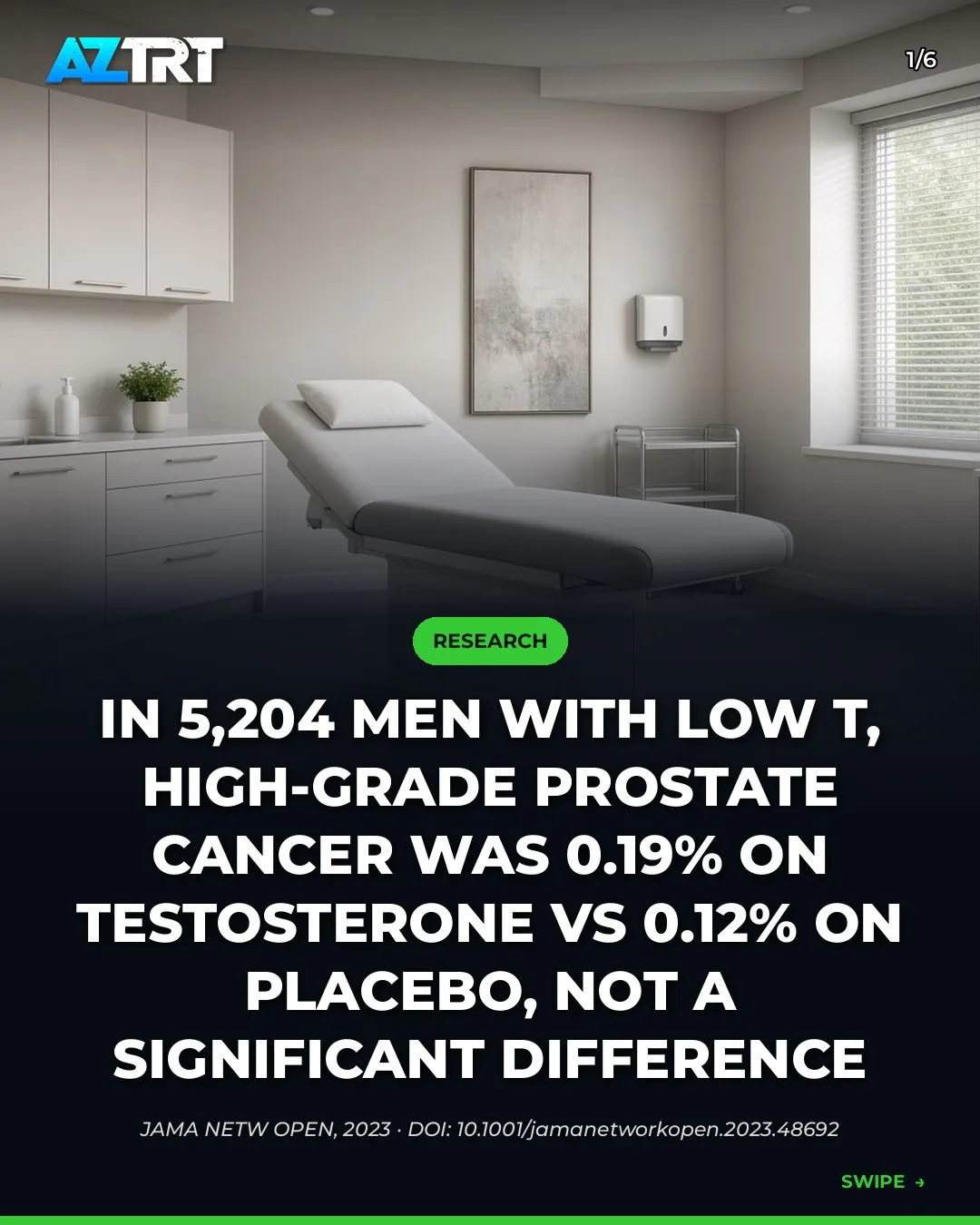
High-grade prostate cancer occurred in 0.19% of the testosterone group and 0.12% of the placebo group (HR 1.62, P=.51), not a significant difference, and any prostate cancer, biopsies and urinary retention were also similar. PSA rose more with testosterone, and because only men at lower prostate risk were enrolled, screening still matters.
Key finding (from the study record): High-grade prostate cancer 0.19% (5/2,596) TRT vs 0.12% (3/2,602) placebo (HR 1.62, 95% CI 0.39-6.77; P=.51) - no significant difference; any prostate cancer, urinary retention, biopsies also similar.
How the study was done
- Design: RCT (TRAVERSE prostate safety endpoint)
- Who was studied: 5,204 hypogonadal men 45-80; PSA >3.0 excluded
- Journal / year: JAMA Netw Open (2023)
- First author: Bhasin S et al.
From the abstract: IMPORTANCE: The effect of testosterone replacement therapy (TRT) on the risk of prostate cancer and other adverse prostate events is unknown. OBJECTIVE: To compare the effect of TRT vs placebo on the incidences of high-grade prostate cancers (Gleason score ≥4 + 3), any prostate cancer, acute urinary retention, invasive prostate procedures, and pharmacologic treatment for lower urinary tract symptoms in men with hypogonadism. DESIGN, SETTING, AND PARTICIPANTS: This placebo-controlled, double-blind randomized clinical trial enrolled 5246 men (aged 45-80 years) from 316 US trial sites who had 2 testosterone concentrations less than 300 ng/dL, hypogonadal symptoms, and cardiovascular disease (CVD) or increased CVD risk.
What it means — and what it does not
Useful takeaway: Over ~14,300 person-years, prostate cancer rates were low and not significantly different between testosterone and placebo.
Limits and caveats: Men at high prostate risk were screened out (PSA >3, severe symptoms). PSA rose more on TRT. Event counts small (wide CI). PSA monitoring still required.
This evidence can inform a conversation with a licensed provider. It is not a guarantee of similar results for you, and it is not a recommendation to start, stop, or change any medication on your own.
Related research we cite
- Cardiovascular Safety of Testosterone-Replacement Therapy — N Engl J Med (2023); also on PubMed. Takeaway: In a 5,246-man randomized trial, men with low T on testosterone had no more heart attacks, strokes or cardiac deaths than men on placebo.
How this connects to care
AZTRT serves men in Arizona with telehealth evaluation, labs, and provider-guided plans when appropriate. Plans start at $149/month or $357/quarter and include initial labs only. Medication ships three months at a time when prescribed.
Relevant pages on this site:
FAQ
What did this study actually find?
Over ~14,300 person-years, prostate cancer rates were low and not significantly different between testosterone and placebo. The design was: RCT (TRAVERSE prostate safety endpoint). Population: 5,204 hypogonadal men 45-80; PSA >3.0 excluded.
Does this mean I should start treatment?
No. Research informs care; it does not prescribe it. A licensed provider reviews your symptoms, labs, and history before any decision. Results vary.
What are the main limits of this evidence?
Men at high prostate risk were screened out (PSA >3, severe symptoms). PSA rose more on TRT. Event counts small (wide CI). PSA monitoring still required.
Keep reading
- One Week of Short Sleep Cut Testosterone 10–15% in Young Men
- T4DM Trial: Testosterone and Type 2 Diabetes Risk in Men on a Lifestyle Program
- Benefits of Testosterone Replacement Therapy for Men
- Best Foods for Testosterone: Nutrition for Hormone Health
Reference
Bhasin S et al. Prostate Safety Events During Testosterone Replacement Therapy in Men With Hypogonadism: A Randomized Clinical Trial. JAMA Netw Open. 2023. https://doi.org/10.1001/jamanetworkopen.2023.48692 · PubMed 38150256.
Next step
Book a free consult with an Arizona-licensed provider. Bring your questions — including anything this study raised for you.
Plans start at $149/month or $357/quarter and include initial labs only. Medication ships three months at a time when prescribed.
Talk to a licensed provider. Results vary. Not medical advice.
Talk to a licensed provider. Results vary. Not medical advice.
