
Best Foods for Testosterone: Nutrition for Hormone Health
What you eat plays a real role in hormone production, though it's rarely a magic fix on its own. Here's what the basics actually look like.
Don't cut fat too low
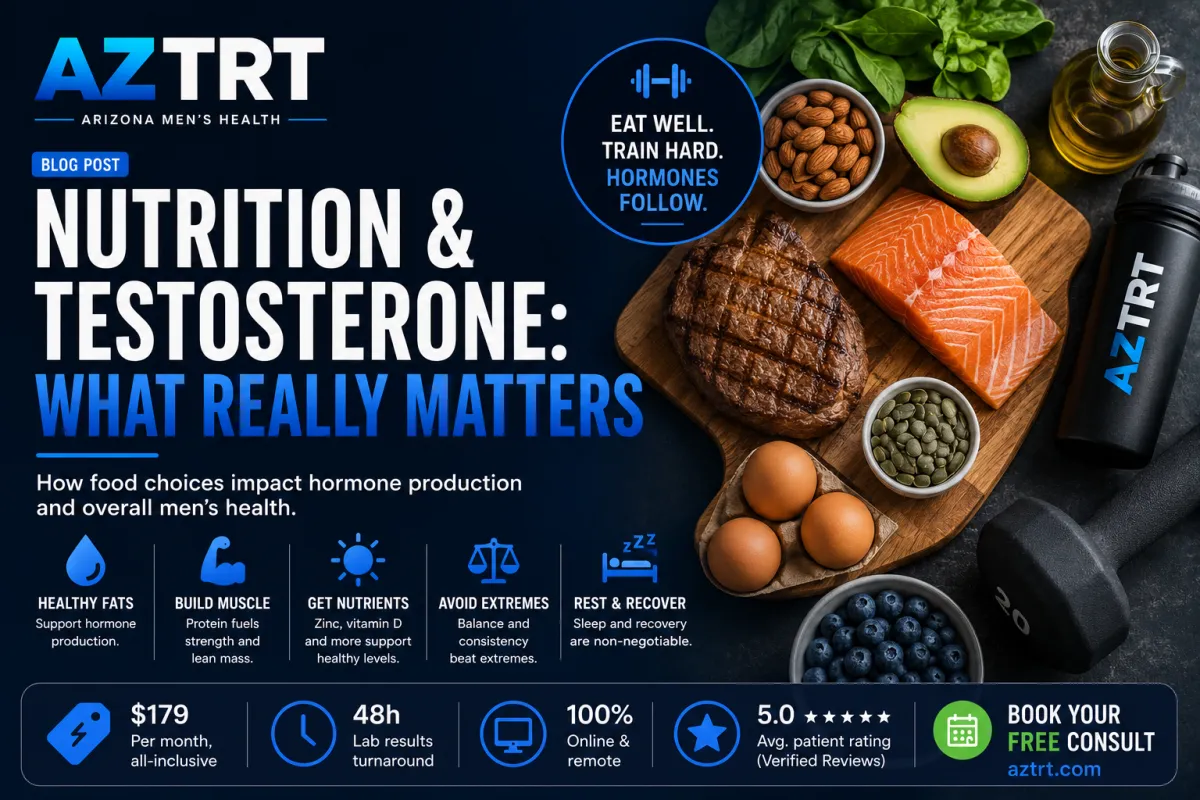
Testosterone is synthesized from cholesterol, and very low-fat diets have been associated with lower testosterone levels in some research. Healthy fats — olive oil, avocados, nuts, fatty fish — deserve a place in your diet, not just carbs and protein.
Protein matters for body composition
Adequate protein supports muscle maintenance and body composition, both of which are tied to hormone health. It doesn't need to be extreme — consistent, adequate intake matters more than hitting an exact number.
Micronutrients worth paying attention to
Zinc and vitamin D deficiencies have both been linked to lower testosterone levels. Whole foods like meat, shellfish, eggs, and leafy greens provide a range of these nutrients, and time outdoors helps with vitamin D.
Watch the extremes
Both chronic overeating (leading to excess body fat) and chronic undereating (extreme calorie restriction) can negatively affect hormone levels. Balance and consistency tend to beat extremes.
The honest takeaway
Nutrition supports the foundation, but it can't correct a genuine clinical deficiency by itself. If you're eating well and still dealing with low-T symptoms, that's a sign to get bloodwork, not to overhaul your diet further.
Curious where you stand? You can book a free, no-obligation consult with an Arizona-licensed provider any time — it takes about 60 seconds to get started, and our FAQ covers most of what people ask before their first visit.
If this was useful, you may also want to read our post on Exercise and Testosterone: Building Muscle Naturally, or browse the full AZTRT blog for more Arizona men's health guides.
