
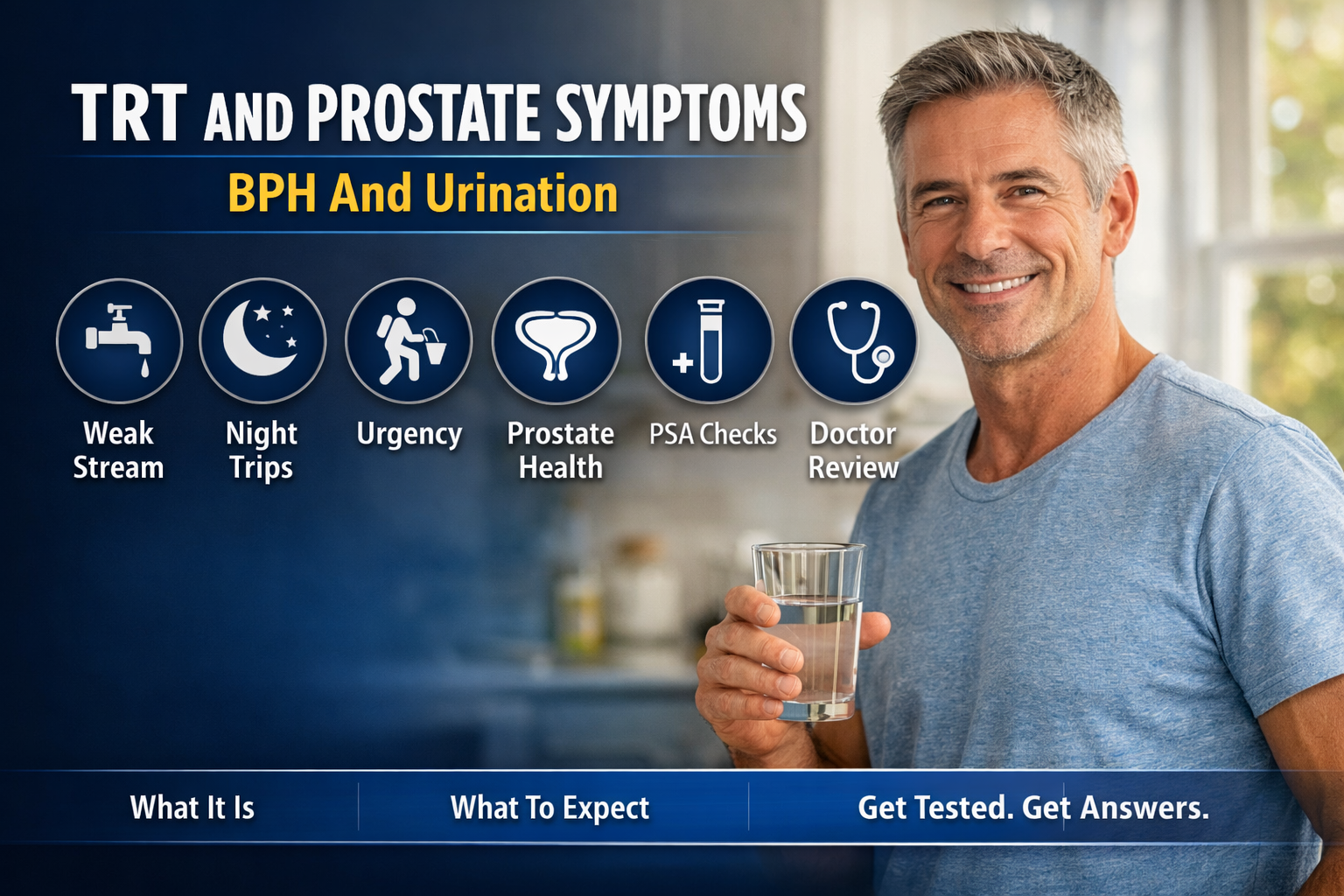
Does TRT Cause BPH or Frequent Urination? Arizona Guide
If you are considering testosterone therapy and you already get up at night to urinate or notice a weaker stream, a fair question is whether TRT causes BPH or frequent urination. The worry makes sense: the prostate responds to hormones, and benign prostatic hyperplasia (BPH) is one of the most common conditions in aging men. Here is what the evidence says, what to watch for, and how doctor-supervised TRT in Arizona handles it.
What BPH is and why it causes urinary symptoms
BPH is a non-cancerous enlargement of the prostate. Because the prostate wraps around the urethra, extra tissue can squeeze the channel and cause a weak stream, hesitancy, urgency, and getting up at night. According to Mayo Clinic, BPH is very common as men get older, and symptoms range from barely noticeable to disruptive.
These symptoms are also not unique to the prostate. Poor sleep, diabetes, excess weight, medications, and even evening fluids can drive nighttime urination. That is why a proper evaluation matters before anyone blames (or credits) hormones. If you snore or wake gasping, it is worth reading about TRT and sleep apnea, because untreated apnea is a classic hidden cause of nighttime bathroom trips.
Does testosterone therapy make BPH worse?
The old belief was that testosterone “feeds” the prostate, so more testosterone must mean a bigger prostate and worse symptoms. Research has not borne that out in the simple way people feared. A systematic review and meta-analysis of testosterone therapy and lower urinary tract symptoms did not find that TRT worsened urinary symptoms on average, and a review of testosterone’s effects on benign and malignant prostate conditions describes how the prostate appears to reach a saturation point, beyond which more testosterone does not keep driving growth.
That does not mean every man is the same. Individual responses vary, and men with significant or worsening symptoms need closer follow-up. For a deeper look at screening and cancer concerns, see our guide on TRT and prostate safety, PSA, and monitoring.
Could TRT actually help urinary symptoms?
Some studies suggest modest improvement in urinary symptom scores in men with low testosterone who are treated. A plausible explanation is that low testosterone is tied to metabolic problems, central weight gain, and inflammation, all of which can aggravate bladder and urinary symptoms. Treating the deficiency and improving body composition may take pressure off. The honest summary: TRT is not a treatment for BPH, and nobody should start it to fix their stream, but it is not the villain it was once made out to be.
Urinary symptoms and low T? Get clear answers.
Doctor-supervised • Arizona-based • Telehealth available
Get Started — Free Assessment →Who should be cautious or get a workup first
Doctor-supervised TRT does not skip steps. Before starting, a clinician should review your symptoms and history, check bloodwork, and decide whether anything needs attention first. Men who warrant extra care include those with:
- Severe or rapidly worsening urinary symptoms, such as a very weak stream or trouble emptying the bladder.
- An elevated or rising PSA, or an abnormal prostate exam.
- Blood in the urine, painful urination, or repeated urinary infections.
- Complete inability to urinate, which is an emergency requiring immediate care.
If your PSA or exam raises questions, those get sorted out first, often with a urology referral. Learn what is typically checked in our guide to bloodwork on TRT and how often it happens.
How monitoring works on TRT
A responsible Arizona TRT program tracks the prostate and your overall safety markers over time. That usually means a baseline PSA and symptom review, repeat labs at set intervals during the first year, and an ongoing conversation about how you are urinating. If symptoms change, the plan changes too: adjusting dose, adding treatment for BPH, or pausing therapy while you are evaluated. For the broader picture of risks and how clinicians manage them, see TRT safety, risks, and side effects.
What to do if you are in Arizona and unsure
Start with a conversation, not a guess. Write down when your symptoms started, how many times you wake at night, and any medications or supplements you take. Then get tested. Many Phoenix-area men do this through online TRT in Arizona with telehealth visits and local lab draws, which keeps follow-up easy and consistent.
Ready to find out if low T is part of the picture?
Doctor-supervised • Arizona-based • Telehealth available
Get Started — Free Assessment →Frequently asked questions
Can testosterone therapy make BPH worse?
For most men, no. Pooled trial data have not shown that TRT worsens urinary symptoms on average. Still, testosterone can influence prostate tissue, so men with significant BPH symptoms should be evaluated and monitored by a clinician before and during treatment.
Does low testosterone cause frequent urination at night?
Low testosterone is not a classic cause of nighttime urination, but it often travels with other contributors such as sleep problems, obesity, and diabetes. A proper workup helps sort out whether hormones, the prostate, or something else is driving the symptoms.
Can I start TRT in Arizona if I already have an enlarged prostate?
Often yes, but it depends on how severe your symptoms are and your PSA and exam results. A licensed provider will review your history, order labs, and decide whether TRT is appropriate and how closely to monitor you.
Sources
