
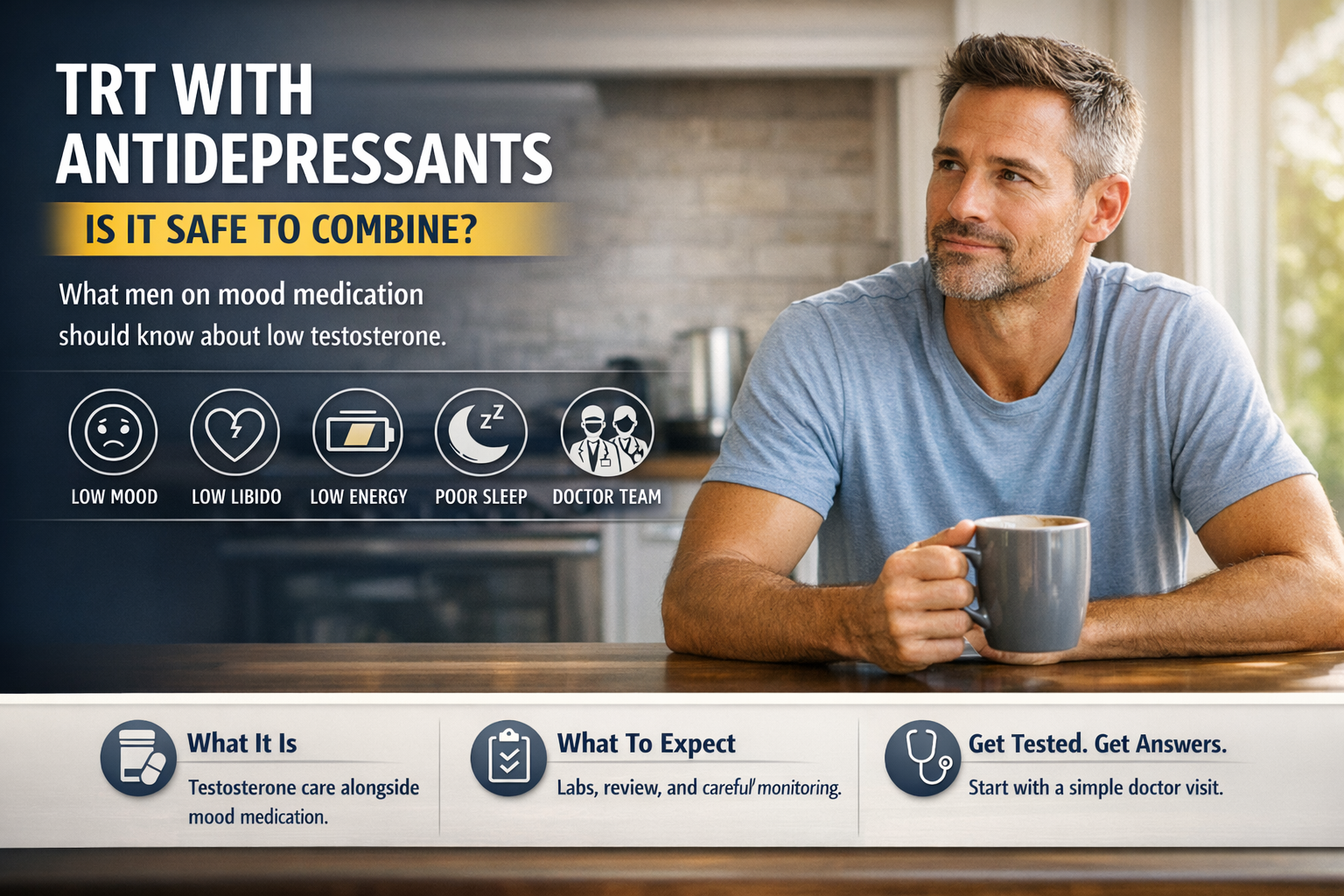
Can You Take TRT With Antidepressants? What Men Should Know
If you take an antidepressant and wonder whether TRT with antidepressants is safe, you are not alone. Low mood, low drive, and a flat sex life overlap with the symptoms of low testosterone, and many Arizona men end up asking whether one treatment can be layered on top of the other. This guide explains what is known, what is still uncertain, and how a Phoenix-area clinician typically approaches the question.
Why low testosterone and antidepressants so often overlap
Depression and low testosterone share symptoms: fatigue, irritability, poor concentration, low libido, and trouble sleeping. That overlap makes it hard to tell which condition is driving how you feel. If you want the full picture on the mood side, see our guide on whether low testosterone can cause depression.
It is also possible to have both at once. A man can have clinical depression that is being treated with an SSRI or similar medication and also have a lab-confirmed testosterone deficiency. In that situation, treating only one problem may leave the other symptoms in place.
What the research says about testosterone and mood
The evidence is mixed, and it is worth being honest about that. A systematic review of randomized placebo-controlled trials on exogenous testosterone and mood looked at whether testosterone changes mood outcomes in men, and the picture across studies was not uniform. Results seem to depend on who is studied, especially whether men truly have low testosterone at baseline.
That is why a proper diagnosis comes first. TRT is a treatment for confirmed testosterone deficiency, not a general mood booster. Our overview of how low testosterone is diagnosed walks through the morning blood tests and repeat measurements doctors rely on.
Antidepressants can affect libido, which muddies the picture
Many antidepressants, particularly SSRIs and other serotonergic drugs, are known to cause sexual side effects such as reduced desire, delayed orgasm, or erectile difficulty. A review of SSRI-induced sexual dysfunction and its management describes how common these effects are and the strategies clinicians use to address them.
This matters because low libido on an antidepressant is not automatically a testosterone problem. Your provider needs to sort out whether the cause is the medication, depression itself, low testosterone, or a combination. For more on that question, read about testosterone and libido.
Can testosterone help men who are on antidepressants?
There is some research on exactly this question. A randomized, placebo-controlled trial of testosterone gel in depressed men taking serotonergic antidepressants examined whether testosterone could improve sexual function in that group. It is one study, and it does not mean TRT works for everyone on an antidepressant, but it shows the combination has been studied rather than being uncharted territory.
The takeaway is cautious: for a man who has both persistent symptoms and clearly low lab values, TRT may be a reasonable part of the plan, discussed with the clinician who manages his antidepressant.
Wondering if low T is part of the picture?
Doctor-supervised • Arizona-based • Telehealth available
Get Started — Free Assessment →What a safe approach looks like in Arizona
Whether you see a provider in person in Phoenix or Scottsdale or through Arizona telehealth, a responsible process usually includes the following steps:
- Full medication review. Your clinician should know every prescription and supplement you take, including your antidepressant, dose, and how long you have been on it.
- Confirmed low testosterone. Morning blood work, repeated if needed, with symptoms that fit. See how to get your testosterone tested in Arizona for the practical steps.
- Coordination with your prescriber. If a psychiatrist or primary care doctor manages your antidepressant, they should be in the loop on any hormone therapy.
- Ongoing monitoring. Follow-up labs and symptom check-ins, including mood, so changes can be spotted early.
If you are unsure who should lead this care, our comparison of a TRT clinic versus a primary care doctor can help you decide.
Warning signs to take seriously
Do not use testosterone to self-treat depression. If you notice worsening mood, hopelessness, or thoughts of harming yourself, contact your prescriber or a crisis line right away rather than waiting for a hormone appointment. In the U.S. you can call or text 988 at any time. And never stop or change an antidepressant dose without your prescriber's guidance, since abrupt changes can cause withdrawal-type effects or relapse.
Bottom line
TRT and antidepressants are not automatically incompatible, but the combination should be individualized. Get the diagnosis right, review all medications, keep every prescriber informed, and monitor both mood and labs over time.
Ready to find out where your testosterone stands?
Doctor-supervised • Arizona-based • Telehealth available
Get Started — Free Assessment →Frequently asked questions
Can I take testosterone while on an SSRI?
Often yes, if you have confirmed low testosterone and your clinicians coordinate care. It should be supervised, with your full medication list reviewed and follow-up labs and mood check-ins scheduled.
Will TRT cure my depression?
No. TRT treats testosterone deficiency, and research on its effect on mood is mixed. It should not replace therapy or antidepressant treatment prescribed by your provider.
Is my low libido from my antidepressant or low testosterone?
It could be either, or both. Antidepressants commonly affect sex drive, and low testosterone does too. Blood testing plus a medication review helps your provider tell the difference.
Sources
- Impact of exogenous testosterone on mood: a systematic review and meta-analysis of randomized placebo-controlled trials — PubMed
- Selective Serotonin Reuptake Inhibitor-Induced Sexual Dysfunction: Current Management Perspectives — PubMed Central (NCBI)
- Testosterone gel replacement improves sexual function in depressed men taking serotonergic antidepressants: a randomized, placebo-controlled clinical trial — PubMed
