
Can Low Testosterone Cause Hair Loss? What AZ Men Should Know
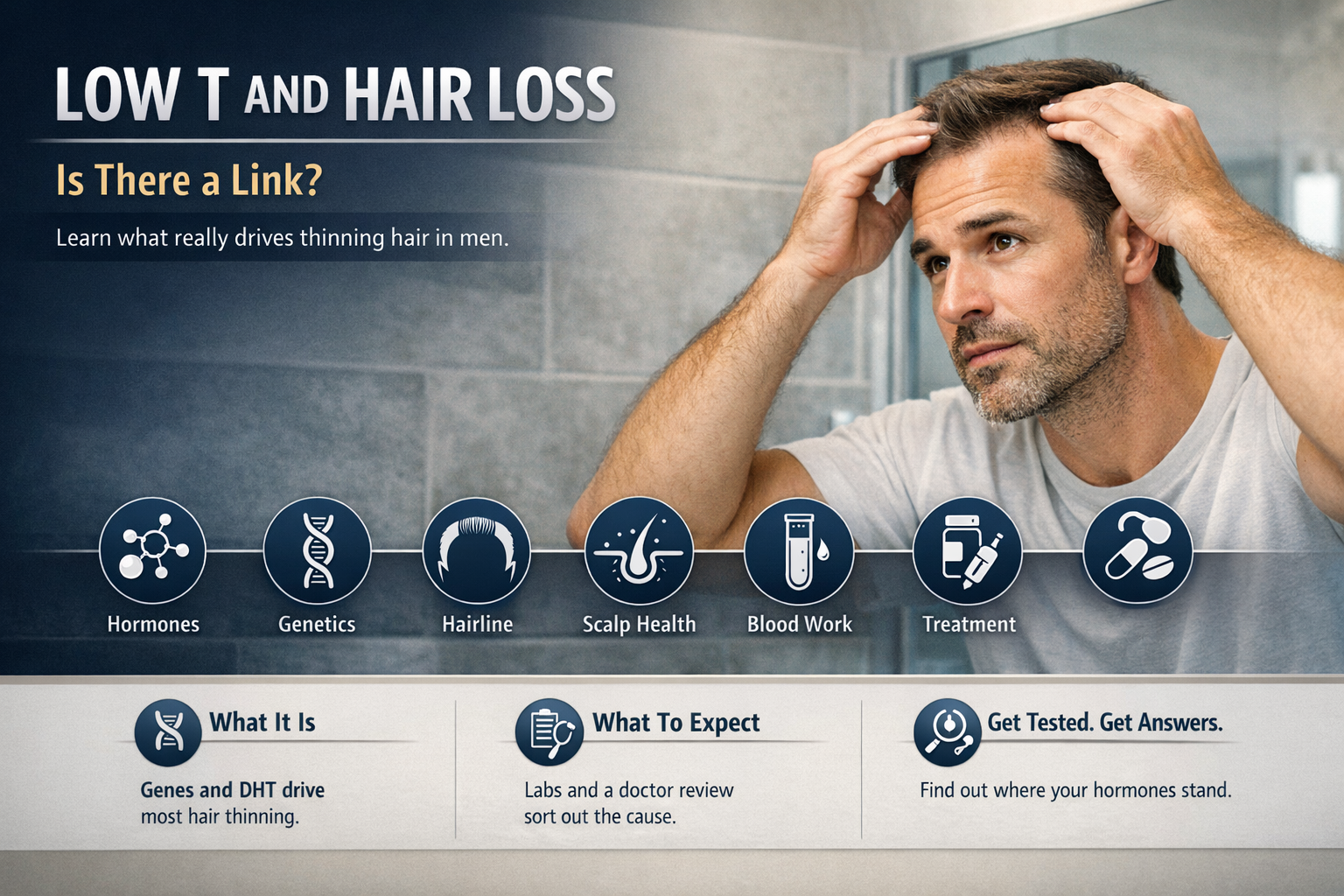
Can low testosterone cause hair loss? It is one of the most common questions Arizona men ask when they notice a receding hairline and start wondering about their hormones. The short answer is that the two are connected, but not in the way most people assume.
Testosterone, DHT, and your hair follicles
Hair thinning in men is usually androgenetic alopecia, a genetically influenced condition tied to androgen hormones. In this pattern, hair follicles on the front and crown of the scalp gradually shrink over time.
The key player is dihydrotestosterone (DHT), a more potent hormone made from testosterone. Cleveland Clinic explains that DHT can shrink hair follicles in men who are genetically sensitive to it. What matters is how your follicles respond, not just how much testosterone you make.
That is why a man with low testosterone can keep a full head of hair, while a man with perfectly normal levels can start thinning in his twenties.
So where does low testosterone fit in?
Low testosterone does not usually cause a receding hairline. Still, hormones influence hair in other ways. Men with true testosterone deficiency sometimes notice less beard growth, thinner body hair, and drier skin. These changes are different from the classic pattern of a receding temple and thinning crown.
Other things can also cause shedding, and they are worth ruling out:
- Thyroid problems can cause diffuse thinning and often cause fatigue too.
- Nutrient gaps, such as low iron or vitamin D, can contribute to shedding.
- Major stress, illness, or rapid weight loss can trigger a temporary shed a few months later.
- Medications and scalp conditions can also play a role.
Wondering if your hormones are part of the picture?
Doctor-supervised • Arizona-based • Telehealth available
Get Started — Free Assessment →Symptoms that point to low T instead
If hair is your only change, low testosterone is unlikely to be the whole story. Hair loss is not on the list of core symptoms clinicians look for. The Endocrine Society guideline on testosterone therapy in men with hypogonadism recommends diagnosing low testosterone only when consistent symptoms and signs appear together with clearly low blood levels.
Those symptoms include low libido, erectile changes, persistent fatigue, low mood, and loss of muscle. Our guide to the signs of low testosterone in men walks through the full list and when to get tested.
How to find out if your testosterone is low
Testing is simple. Testosterone is highest in the morning, so the blood draw is usually done early, and a low result is typically confirmed with a second test. You can read how low testosterone is diagnosed step by step, and why it helps to understand free versus total testosterone when you read your results.
If you live in the Phoenix area, it is easy to get your testosterone tested in Arizona through a local lab draw, with a provider reviewing the results by telehealth.
What about hair loss on TRT?
Many men worry that treating low T will make thinning worse. The honest answer is that it depends on your genetics. In men already prone to pattern baldness, added testosterone can be converted to more DHT, which may accelerate a process that was going to happen anyway. Many men on treatment notice no change at all. We cover this in detail in does TRT cause hair loss.
If hair is a big concern for you, tell your provider before you start. Your family history, your current hairline, and your goals all help shape a plan, and a dermatologist can offer proven hair treatments in parallel.
When to see someone
Book a visit if your hair is thinning quickly, you are losing patches, or you also have symptoms of low testosterone. A hormone panel and a scalp evaluation together will usually give you a clear answer, so you are not guessing or buying supplements that do not work.
Get your hormone levels checked the right way
Doctor-supervised • Arizona-based • Telehealth available
Get Started — Free Assessment →Frequently asked questions
Does low testosterone cause hair loss?
Not directly in most men. Pattern hair loss is driven mainly by genetics and sensitivity to DHT, so a man can have normal testosterone and still thin. Low testosterone can, however, travel with other changes, like less body and facial hair, that men sometimes notice at the same time.
Can TRT stop hair loss or make it worse?
TRT does not treat pattern baldness. In men who are genetically prone to it, added testosterone can give the body more raw material to convert to DHT, which may speed up thinning that was already coming. Your provider can talk through your family history before you start.
Which Arizona doctor should I see about thinning hair and low T symptoms?
A dermatologist can evaluate the scalp, while a hormone-focused clinic can check testosterone with a morning blood draw. If you have both hair changes and symptoms like fatigue or low libido, getting both checked makes sense.
Sources
