
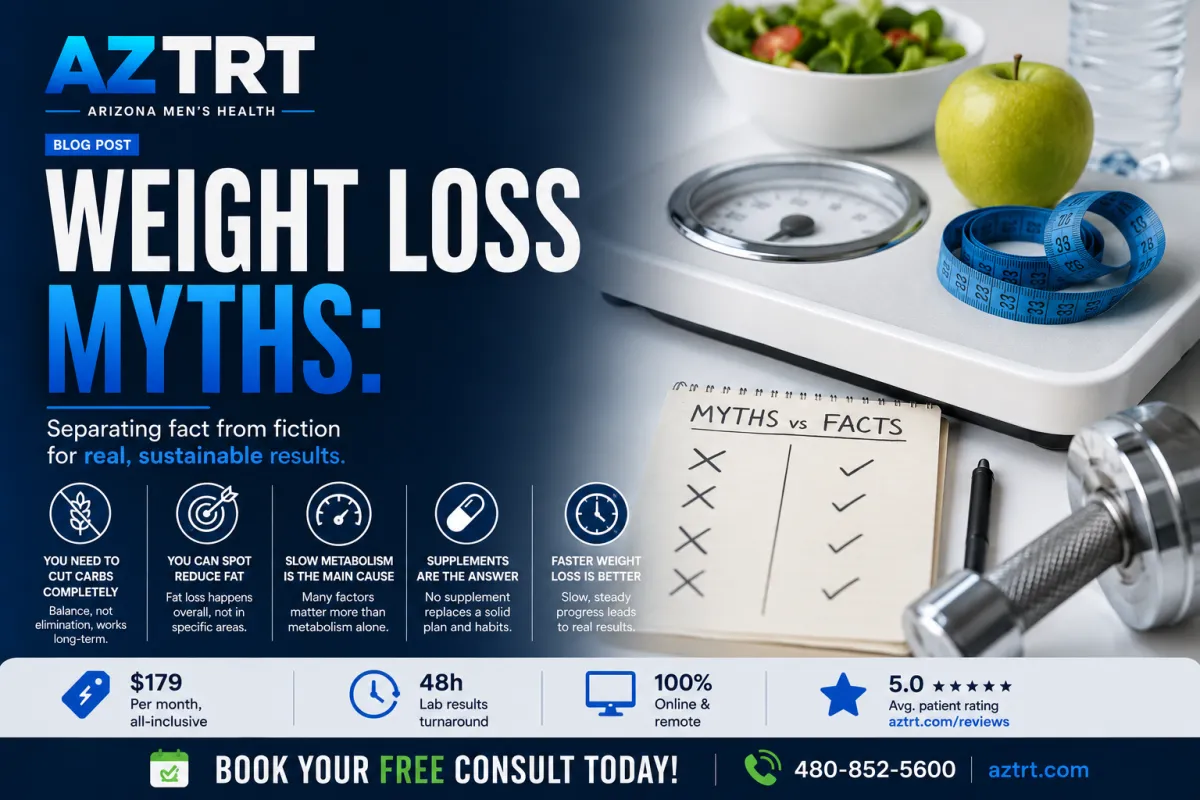
Weight Loss Myths Debunked: What Actually Works for Men
Men trying to lose weight get a flood of conflicting advice, from carb-free diets to fat-burning pills. Below are five common myths, what the research actually says, and how to tell evidence from marketing.
Myth: You need to cut carbs completely
Sustainable weight loss comes down to a consistent calorie deficit over time. Carbohydrates aren't inherently the enemy — extreme, unsustainable restriction just tends to backfire.
Myth: Fat can be "targeted" with specific exercises
Spot reduction — the idea that ab exercises burn belly fat specifically — isn't supported by research. Fat loss happens throughout the body based on genetics and overall calorie balance, not by working one muscle group.
Myth: Slow metabolism explains most weight struggles
Metabolism varies between individuals, but dramatic "slow metabolism" as the sole explanation for weight gain is rare. Activity level, diet composition, sleep, and stress usually play a bigger role than most people assume.
Myth: Supplements can replace a real plan
Fat-burning supplements are largely unregulated and rarely produce meaningful, lasting results on their own. There's no substitute for a sustainable nutrition and activity plan — with medical support like GLP-1 therapy where appropriate.
Myth: Fast weight loss is always better
Rapid, extreme weight loss is harder to sustain and can come with muscle loss. Gradual, steady progress — especially when medically supervised — tends to hold up better long term.
Cutting through the noise starts with getting real information from a provider who can look at your specific situation.
How to spot a weight loss claim worth ignoring
- It promises a specific number of pounds in a set number of days
- It hinges on one food, one trick or one “secret”
- It leans on dramatic before-and-after photos with no context
- It sells a supplement with a “proprietary blend” and no dosing details
- It never mentions side effects or medical screening
Prescription options like tirzepatide are prescribed only after a medical evaluation, and a licensed provider will go over side effects and whether it's appropriate for you.
Curious where you stand? You can book a free, no-obligation consult with an Arizona-licensed provider any time — it takes about 60 seconds to get started, and our FAQ covers most of what people ask before their first visit.
If this was useful, you may also want to read our post on Understanding GLP-1 Medications: How They Work, or browse the full AZTRT blog for more Arizona men's health guides.
