
The Connection Between Weight and Testosterone
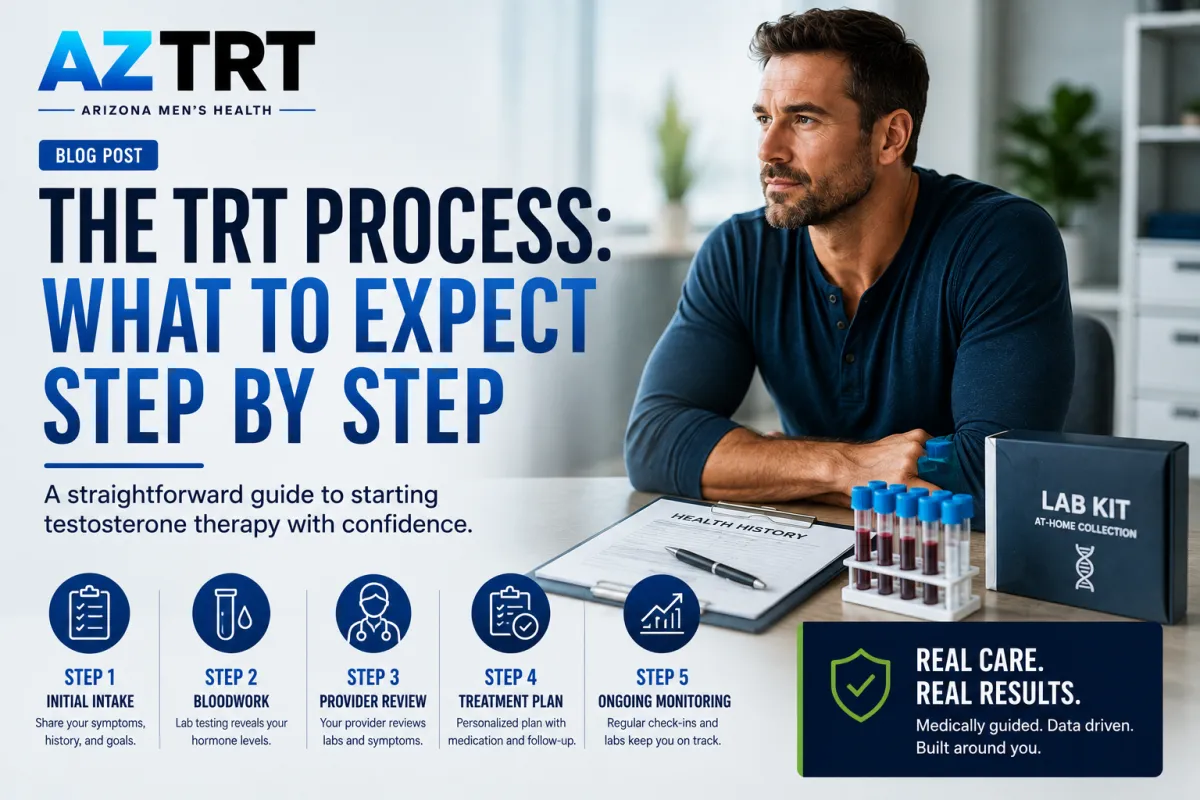
Starting the process of evaluating testosterone therapy can feel intimidating if you don't know what's involved. Here's a straightforward walkthrough.
Step 1: Initial intake
You'll typically fill out a questionnaire covering your symptoms, medical history, and goals. This gives your provider context before you even talk.
Step 2: Bloodwork
You'll complete lab testing — either through an at-home kit or a partner lab — to measure your actual testosterone levels along with other relevant markers. This is the objective piece that guides everything else.
Step 3: Provider review
A licensed provider reviews your labs alongside your symptoms and history. This is where they determine whether your levels fall into a clinically low range and whether treatment is appropriate for you specifically.
Step 4: Treatment plan (if appropriate)
If TRT is recommended, you'll receive a personalized plan. This typically covers the medication, delivery method, and a schedule for follow-up labs and check-ins.
Step 5: Ongoing monitoring
TRT isn't "set and forget." Regular follow-up bloodwork and consultations help your provider adjust your plan and monitor for any side effects over time.
What it's not
A legitimate consultation should never skip bloodwork or hand out a prescription without a real medical evaluation. If a service doesn't require labs, that's a red flag.
Going in informed makes the whole process less intimidating — you're not signing up for anything blind.
Curious where you stand? You can book a free, no-obligation consult with an Arizona-licensed provider any time — it takes about 60 seconds to get started, and our FAQ covers most of what people ask before their first visit.
If this was useful, you may also want to read our post on The Connection Between Weight and Testosterone, or browse the full AZTRT blog for more Arizona men's health guides.
