
The Connection Between Testosterone and Heart Health
The relationship between testosterone and cardiovascular health has been debated for years, and the science has evolved. Here's where things currently stand.
What earlier concerns were based on
Some early studies raised questions about whether TRT could increase cardiovascular risk, which led to caution in how it was prescribed and monitored.
What more recent research suggests
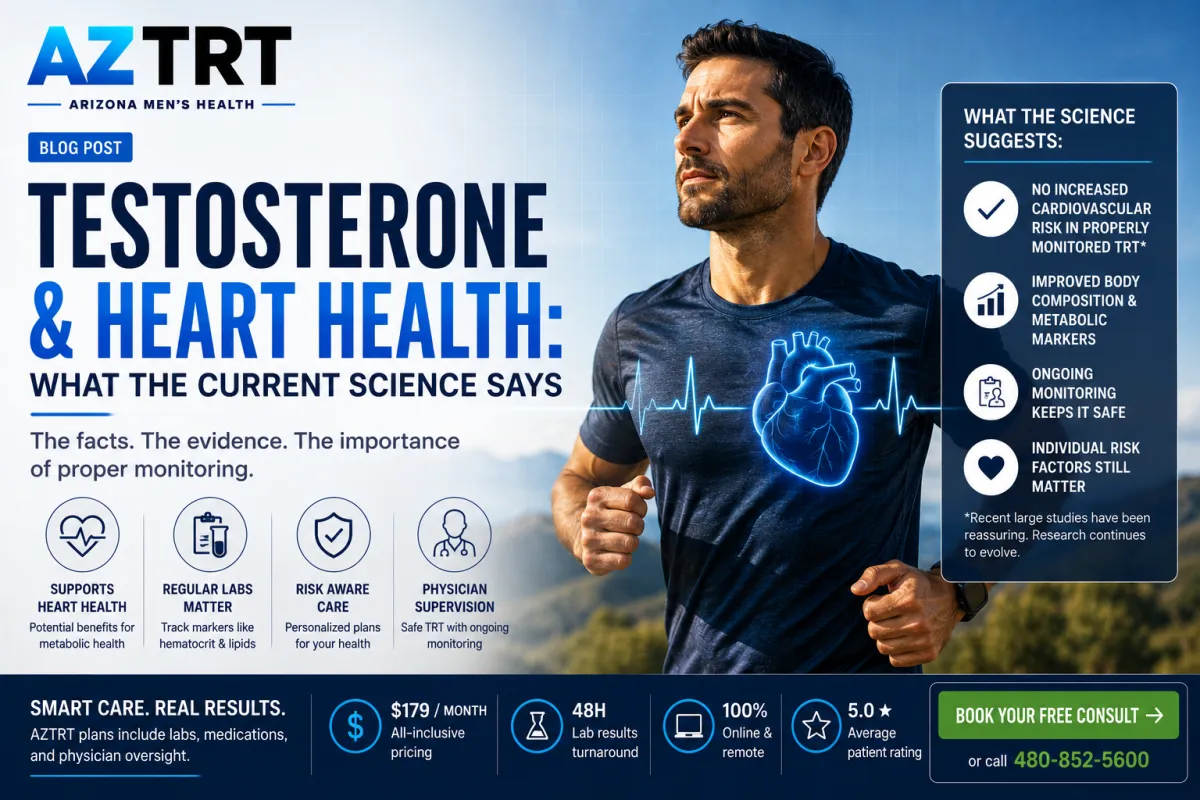
More recent, larger studies have generally been reassuring, suggesting that properly monitored TRT in men with confirmed low testosterone doesn't appear to meaningfully increase cardiovascular risk, and some research points to potential benefits related to body composition and metabolic health. That said, research continues to evolve, and individual risk factors matter.
Why monitoring matters
This is part of why ongoing bloodwork and check-ins are standard practice during TRT — tracking markers like hematocrit (red blood cell concentration) helps catch and manage any changes that could affect cardiovascular health before they become a problem.
Who should be extra cautious
Men with existing cardiovascular conditions or risk factors should have a thorough conversation with their provider about their specific risk profile before starting TRT. This isn't a reason to avoid treatment automatically — it's a reason to make sure it's properly supervised.
The bottom line
Current evidence doesn't support blanket cardiovascular fears about properly monitored TRT, but it also underscores why self-treating or skipping follow-up labs isn't a good idea. Supervision is what keeps this equation safe.
Curious where you stand? You can book a free, no-obligation consult with an Arizona-licensed provider any time — it takes about 60 seconds to get started, and our FAQ covers most of what people ask before their first visit.
If this was useful, you may also want to read our post on How to Read Your Hormone Lab Results, or browse the full AZTRT blog for more Arizona men's health guides.
