
How Alcohol Affects Testosterone Levels in Men
Alcohol and testosterone have a complicated relationship, and the effects depend heavily on how much and how often you drink.
Acute effects
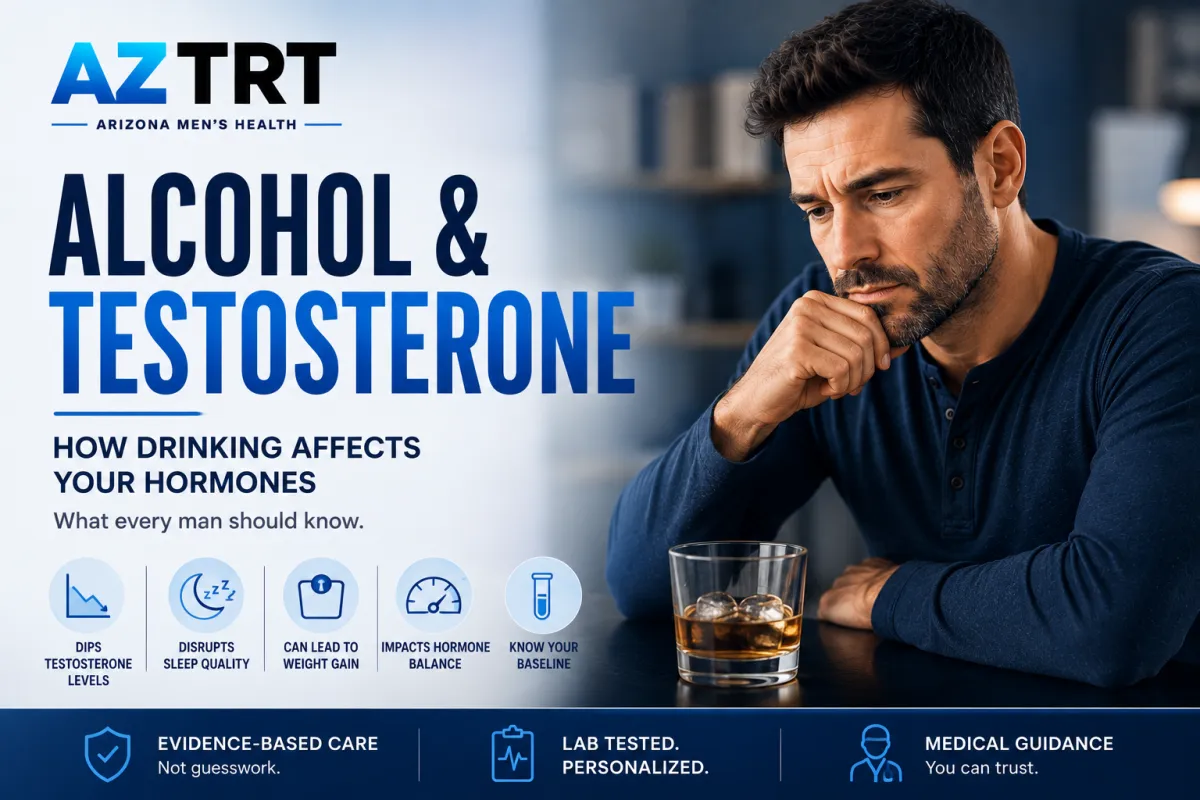
Even moderate drinking can cause a temporary dip in testosterone levels in the hours after consumption, partly because the liver prioritizes metabolizing alcohol over other processes, including hormone regulation.
Chronic effects
Regular, heavy alcohol use is more concerning. Long-term heavy drinking has been linked to sustained reductions in testosterone production, damage to the testes' ability to produce hormones, and disruption of the broader hormonal signaling system between the brain and testes.
The indirect impact
Alcohol also affects sleep quality, even when it helps you fall asleep faster — it disrupts the deep and REM sleep stages where much of your testosterone production occurs. It can also contribute to weight gain, which independently affects hormone levels, as discussed in an earlier post.
What moderate drinking looks like
Occasional, moderate alcohol consumption isn't likely to meaningfully affect most men's hormone levels long term. The concern is really about heavy or frequent drinking becoming a consistent pattern.
Practical takeaway
If you're working on optimizing your hormone health — through lifestyle changes, TRT, or both — it's worth being honest with yourself and your provider about your actual drinking habits. It's one of the more overlooked factors in the equation.
Curious where you stand? You can book a free, no-obligation consult with an Arizona-licensed provider any time — it takes about 60 seconds to get started, and our FAQ covers most of what people ask before their first visit.
If this was useful, you may also want to read our post on Common Myths About Testosterone Therapy, or browse the full AZTRT blog for more Arizona men's health guides.
